
The Story
Why it exists.
The beginning
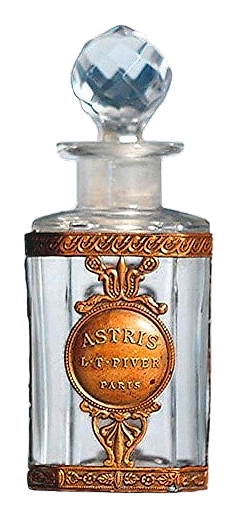
Astris arrived in 1908 from the atelier of George Darzens, with Pierre Armigeant also credited on the composition. L.T. Piver is a French house, and Astris sits comfortably within their catalog of archival releases. The fragrance reads as a floral aldehyde on paper, which in 1908 meant something specific: the bright, almost electric lift of synthetic aldehydes stacked against a deep bouquet of jasmine, rose, violet, and ylang-ylang. It was not a loud launch, exactly, but it was a contained one, the kind of scent meant for the wrist rather than the foyer. The composition moves with a deliberate restraint, asking the wearer to lean in rather than step back.
The tobacco note threads through Astris in a way that gives the composition its particular gravity. Where many floral aldehydes of the era leaned entirely on green sharpness and effervescent brightness, Astris pulls in something warmer from the opening minutes, a slightly sweet, dry tobacco presence that anchors the aldehydes before they can drift into pure sparkle. The ylang-ylang does similar work in the heart, adding a creamy density that jasmine and rose alone could not carry.
The evolution
The first five minutes are the loudest Astris ever gets. Aldehydes arrive with a fizzy, cold-soap brightness, the kind of opening that registers before you register what it is. Tobacco threads through underneath, faint and dry, adding a tobacco-shop warmth that keeps the aldehydes from feeling surgical. Lily of the Valley lifts the whole thing into something green-edged and outdoorsy, briefly sunlit before the heart takes over. Around the 20-minute mark, the aldehydes step back and jasmine, rose, violet, and ylang-ylang assemble into a powdery floral that feels almost tactile. This is where Astris becomes a skin scent, the kind of fragrance that lives in the space between wrist and sleeve. The heart holds for a solid 2-3 hours, dense and creamy rather than bright. The drydown pulls in musk, vanilla, sandalwood, and amber.
Cultural impact
Astris occupies a particular place within L.T. Piver's catalog, recognized among those who seek out archival florals as a composition that wears close and rewards attention rather than demanding it. The fragrance shares DNA with the early-century floral aldehydes that defined a certain strand of perfumery, compositions built on the tension between synthetic sparkle and natural depth. It's the kind of release that appeals to wearers who already appreciate the architecture of vintage French perfumery, those drawn to fragrances that prioritize composition over marketing.