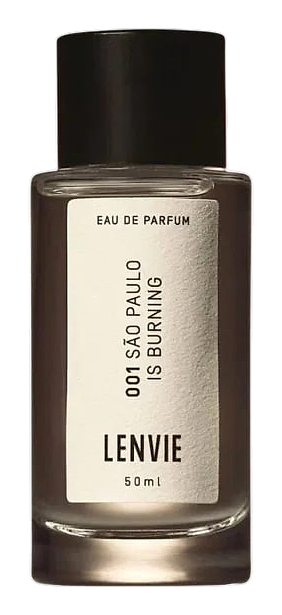

The Story
Why it exists.
The beginning
#001 São Paulo is Burning reads like the city itself, because L'envie Parfums doesn't traffic in nostalgia. The fragrance was released in 2019, carrying a numbered title that gives it the weight of a catalog entry rather than a seasonal release. Perfumers Isaac Sinclair and Fanny Grau built it as a woody-leathery composition, the kind of urban scent that feels less like a fragrance and more like a sidewalk after rain. There's a smokiness that suggests something burning nearby, maybe leaves or asphalt, layered against a leather note that pulls toward the rough side rather than the polished glove leather of heritage perfumery. As it wears, the woods deepen and settle into something quieter, almost resinous, with the smoke softening into a dry warmth that clings to skin for hours.
What makes this composition work is the tension between the aldehyde-grapefruit opening and the heavy resinous base. Aldehydes in a leather fragrance is a deliberate choice, the cold, almost metallic sheen that makes everything underneath feel sharper, more architectural. The iris and geranium in the heart prevent the tobacco and patchouli from collapsing into something purely masculine-coded, while labdanum and tonka add a warm sweetness that keeps the leather from feeling punishing.
The evolution
The opening moves fast. Aldehydes flash, grapefruit splits open, bergamot brightens everything, and for the first ten minutes you're wearing something almost sparkling, almost synthetic in a way that feels deliberate. Then the geranium and green facets arrive, and the composition tilts. The heart isn't delicate. Sandalwood and iris stack up, tonka bean sweetens the edges, labdanum gives it weight. By the two-hour mark, the leather has settled in, frankincense is smoking quietly in the background, and tobacco has started to do the heavy lifting. The drydown is where this earns its reputation. Patchouli, moss, leather, and tobacco stay close to skin for another four to six hours, sometimes longer on fabric. The next morning, the jacket still smells like the bar you left at midnight.
Cultural impact
The fragrance sits in the company of woody-leather compositions built for mood, the kind of scent that collectors reach for when they want something that reads deliberate and grounded rather than ornamental. It wears with a smoky, almost ashy quality in the opening, the kind of scent that announces itself without shouting, then pulls back as the leather and woods take their turns at the surface. On skin, the composition evolves through a clear arc: a sharper, brighter attack that carries hints of something burning, a heart where leather roughens up and the wood begins to show its grain, and a drydown that settles into a low, resinous warmth.