The Story
Why it exists.
The beginning
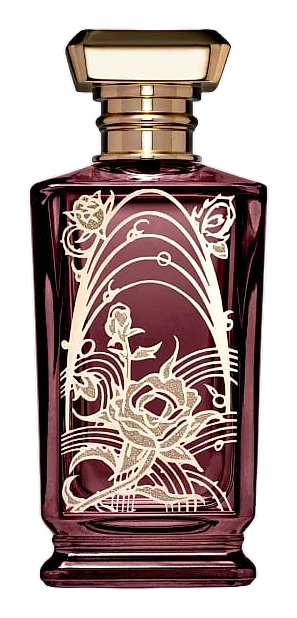
Reverie Rose arrived in 2026 as part of L'Âme Botanique's ongoing translation of botanical specimens into wearable scent. Nathalie Feisthauer composed it, a perfumer whose work tends to find the edge between the living plant and its absence, the flower still in the soil versus the flower pressed between pages. Reverie suggests dreaming, drifting, the half-lit state where thought loosens its grip and the senses take over. The fragrance itself reads as one of the colder entries in the house's catalogue, a garden caught between frost and the first exhale of smoke from nearby resin. It treats rose not as centerpiece but as late arrival, patient and unmistakably present once it finally shows.
The composition's insistence on delay defines much of its character. Chinese lantern and snowdrop open the door, juniper cutting through with something almost bracing, sharp enough to clear the air before anything floral can land. The rose otto in the heart doesn't arrive until incense has already marked the walls, and even then it shares space with Himalayan poppy, a less common floral note that adds a papery, slightly mineral quality. This one makes you wait. The base goes darker still.
The evolution
The first 15 minutes are the coldest part. Juniper hits bright and almost metallic, the kind of note that feels more like walking outside than putting on fragrance. Snowdrop and Chinese lantern add something green and faintly waxy underneath, the memory of stems rather than petals. Then incense begins to rise, not aggressively, more like smoke drifting into a room from somewhere you can't see. By the 30-minute mark the rose otto has fully entered, warmer now, but still shadowed by the Himalayan poppy's dusty mineral tone. It never becomes a sweet rose. It stays in the range of crushed petals left in a drawer with cedar lining. The drydown takes several hours to fully settle into the base. Indian sandalwood's creaminess surfaces against Laotian oud's leathery darkness, and myrrh holds the whole thing in place with that ancient-resin feeling.
Cultural impact
Reverie Rose treats rose as an ingredient among equals rather than the headliner, and that choice gives the composition a different gravity than most florals. Its incense-oud backbone gives it the contemplative weight of a piece designed for slow wearing rather than quick impression. For wearers drawn to scent as quiet signal, it offers rose at a lower temperature and a longer arc. The fragrance fits a broader current in modern perfumery where rose is being handled less as a category and more as a raw material, pushed into unfamiliar contexts and balanced against materials it isn't traditionally paired with.