
The Story
Why it exists.
The beginning
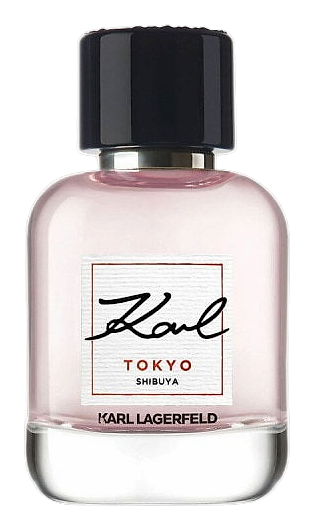
Karl Lagerfeld's Places by Karl collection translates cities into scent. Tokyo Shibuya is the district where everything converges, the Scramble Crossing, fashion culture, the precise chaos of ten thousand people moving at once. Emilie Bevierre-Coppermann built the fragrance around that contradiction: controlled architecture housing electric energy. The brief wasn't 'beautiful Tokyo.' It was 'Tokyo as a feeling.'
The top accord, rhubarb and aquatic notes, exists because Shibuya is both sterile and alive. Rhubarb gives the opening its edge, a tartness that announces arrival rather than easing in. The floral heart of cherry blossom, peony, and magnolia softens the city into something wearable. White musk and cedar anchor it all, keeping the urban energy grounded. No single note dominates. The composition moves like foot traffic.
The evolution
The opening announces itself immediately, rhubarb's green tartness over cool aquatic notes. Within minutes, cherry blossom takes over, dampening the sharpness into something gentler. The peony and magnolia arrive quietly, not as a wave but as a shift. By the third hour, the base notes surface: white musk keeping the skin close, cedar adding a quiet woodiness, amber warming everything underneath. The drydown stays intimate. Moderate sillage means it follows rather than leads. On most skin types, expect six to eight hours before the clean musk fades to something skin-close.
Cultural impact
Tokyo Shibuya sits in the Places by Karl collection alongside other city-inspired scents. The fragrance attracts wearers who want something urban and modern, clean enough for professional settings, distinctive enough to avoid blending in. It's been compared favorably to designer classics at higher price points, offering a similar floral-fresh profile without the luxury markup. The moderate sillage and clean composition make it a quiet presence in shared spaces, while the rhubarb opening ensures it doesn't go unnoticed.