
The Story
Why it exists.
The beginning
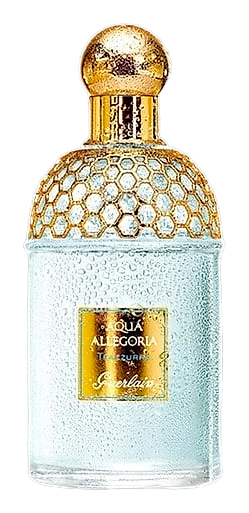
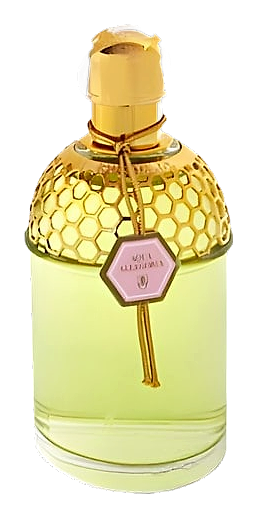
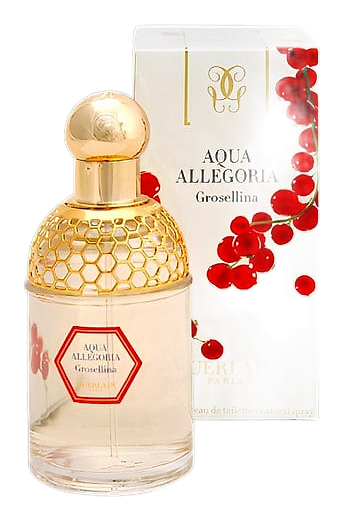
The Aqua Allegoria line arrived in 1999 as Guerlain's answer to a world that wanted lightness without sacrifice. Grosellina followed in 2005, created by Sylvaine Delacourte, Karine Dubreuil-Sereni, and Maurice Roucel, three perfumers who understood that fresh doesn't have to mean flimsy. The brief was simple: make red currant the protagonist. Not a supporting note, not a background flicker. The main event. Against a citrus base of bergamot, Amalfi lemon, and mandarin, the currant would have room to be tart, green, and alive, the way it actually smells on the branch, not the way it sounds in a flavor profile.
Red currant occupies an unusual position in perfumery. It's tart, almost sour, with a greenness that reads as stem and leaf rather than just fruit. Most fragrances featuring it push it into sweet territory, let it be consumed by raspberry or strawberry. Grosellina keeps the tartness intact, surrounds it with white tea and raspberry leaf to amplify that green edge, and lets the fruit breathe without drowning it in sugar. The result feels more like walking through a currant bush than eating a currant candy. It's a subtle distinction, but one that separates a composition from a confection.
The evolution
The opening hits immediately with bergamot and Amalfi lemon, sharp, bright, citrus-forward in a way that announces itself without shouting. Within minutes, red currant takes over, and that's where the fragrance finds its footing. The citrus doesn't disappear; it recedes, becomes the frame rather than the painting. The heart holds for the longest stretch, sustained by white tea and raspberry leaf keeping things green and awake. By the third hour, peach arrives, soft, warm, slightly powdery, and the whole thing settles into something quiet and intimate. The sillage is moderate from start to finish, never filling a room but always present within arm's reach. By hour five, you're relying on proximity to catch the drydown, and by six, it's largely gone from skin, though it may linger on clothing into the next day.
Cultural impact
Grosellina occupies an interesting position in the Aqua Allegoria line, it's the one that most committed to fruit-as-protagonist, and that's earned it a devoted following among those who want freshness without sweetness. The fragrance has become a reference point for anyone describing what a 'true' red currant note should smell like in perfumery. Its discontinuation has only strengthened its cult status.
The House
GuerlainGuerlain stands as one of the oldest and most revered perfume houses in the world, founded in Paris in 1828 by Pierre-François-Pascal Guerlain. What began as a boutique on rue de Rivoli quickly became the preferred destination for Parisian society, attracting dandies and elegant women who sought custom-crafted fragrances. The house's influence grew to such heights that Guerlain earned the title of Official Perfumer to Napoleon III after presenting Eau de Cologne Impériale to Empress Eugénie as a wedding gift in 1853. This royal patronage marked the beginning of Guerlain's enduring association with European aristocracy, as the house went on to create fragrances for Queen Victoria and Queen Isabella II of Spain. Today, under the creative direction of Thierry Wasser, the fifth-generation perfumer, Guerlain continues to shape the landscape of fine fragrance with a portfolio spanning over 1,100 olfactory creations. The house remains headquartered at its legendary Champs-Élysées mansion, a historic monument that anchors Guerlain's position at the intersection of heritage and contemporary luxury.
The Creator
Sylvaine Delacourte & Karine Dubreuil-Sereni & Maurice RoucelDelacourte favors structural clarity over ornamental complexity. Her compositions tend toward clean architectural lines, where each material occupies a defined role rather than dissolving into a fog of accord.