The Story
Why it exists.
The beginning
Bibi arrived in 1988, when Jean Barthet translated the house's millinery heritage into something you could wear rather than merely display. A hat transforms how you move through a room; Bibi was conceived as its olfactory equivalent, an invisible accessory that shapes presence without demanding attention. The name itself suggests intimacy: Bibi as a nickname, something whispered rather than announced. The hat's philosophy carries through, confidence that shapes space quietly, elegance that speaks softly but clearly, presence that lingers without announcing itself. It's the idea that the most powerful statement can be made in a whisper, and that what you wear close to the skin matters as much as what you show the world.
The note structure reveals the thinking: green-citrus brightness up top (the hat's architecture), a full floral heart (the volume, the presence), and an animalic base (the warmth of actual skin beneath the silhouette). The inclusion of tiare flower and frangipani places this squarely in tropical floral territory, creating a lush, sun-drenched middle that feels both expansive and intimate. Civet and oakmoss provide grounding depth, their earthy, animalic qualities anchoring the brightness above.
The evolution
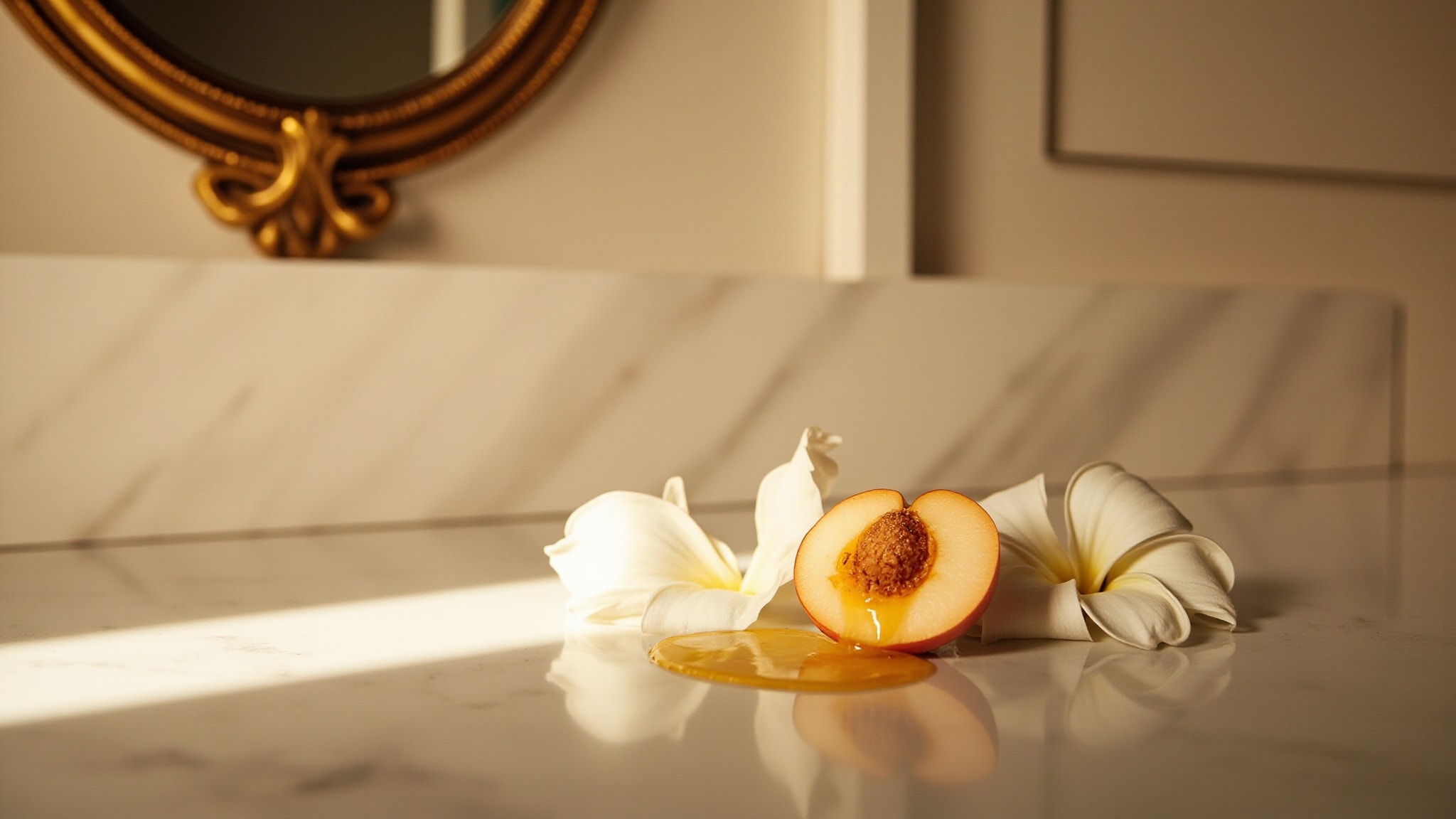
The opening announces itself with white peach and bergamot, bright, clean, the smell of fruit at its peak. Coriander threads in quietly, its herbal edge preventing anything too precious. The heart belongs to tropical florals: tiare and frangipani bloom in equal measure, jasmine adding depth, rose softening the lift. Honey arrives as the florals peak, golden and warm, sweet without apology. Then the base shifts the register entirely. Oakmoss and sandalwood create a mossy-woody foundation; vanilla and tonka bean add sweetness; civet adds animalic warmth that grounds everything. The drydown is intimate, close, the kind of presence that someone standing beside you will notice before you do. On fabric, the green-citrus opening dissipates first, leaving the honeyed florals to mingle with the mossy base for hours, slowly fading into a soft, warm whisper.
Cultural impact
Bibi arrived in 1988, marking a significant chapter in Jean Barthet's perfumery work. The fragrance embodies a refined aesthetic that draws from the house's millinery heritage, translating sculptural hat design into olfactory form. As part of the Jean Barthet collection, Bibi represents the brand's approach to creating accessories that speak quietly but distinctly, fragrances that shape presence without demanding attention. The perfume stands as an example of the careful craftsmanship associated with the house, where each element is considered rather than merely combined.