
The Story
Why it exists.
The beginning
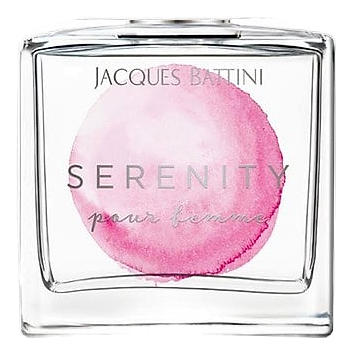
Serenity launched in 2018 as a women's fragrance from Jacques Battini, a French perfume house founded in 2012. The available record gives the name and release year, but not a specific story behind the composition. What it does offer is a clear idea: a fruity floral built around contrast. Blackcurrant, green apple, and white peach bring a bright, almost polished start. Jasmine, lily of the valley, rose, and violet shift the mood toward a bouquet, while amber, oakmoss, vanilla, and white musk give the composition a warmer, more lingering base.
The interesting part is the handoff between fruit, flowers, and skin. Blackcurrant adds a dark, juicy edge to green apple and white peach, so the opening feels lively rather than simply sweet. The heart introduces four floral notes with different personalities: jasmine brings warmth, lily of the valley adds a cool green lift, rose adds softness, and violet brings a powdery, violet-like depth. Amber, oakmoss, vanilla, and white musk then keep the composition grounded in warmth, earth, and clean musk.
The evolution
Serenity begins with a crisp, fruity impression. Blackcurrant gives the opening a dark berry snap, while green apple and white peach make it feel juicy, polished, and immediately approachable. That brightness loosens as jasmine, lily of the valley, rose, and violet take over. The heart is floral, but not innocent: the fruit keeps a sweet edge underneath, and the bouquet gradually becomes warmer and more tactile. In the drydown, amber and vanilla bring a dessert-like softness, oakmoss adds a quiet earthy shade, and white musk leaves a clean, skin-close finish. The result is a sweet floral trail that can linger for roughly 4-6 hours, with moderate sillage that stays noticeable without becoming a room-filling statement.
Cultural impact
Serenity fits the house's wider interest in fragrance as a personal narrative and considered object. Its fruity floral profile sits within a familiar fragrance register, while the Jacques Battini context gives it a more curated, collector-oriented frame. The available record is limited, so there is no grounded evidence here for a specific reception, press story, or cultural movement.