
The Story
Why it exists.
The beginning
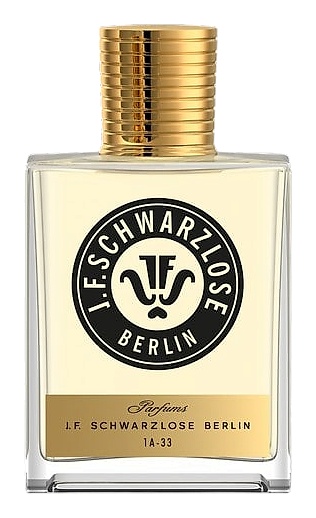
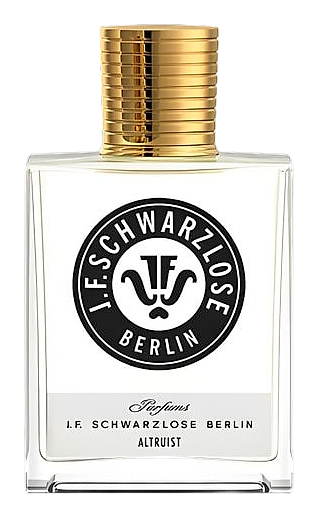
Altruist began as a conversation between scent and sight. In 2017, J.F. Schwarzlose Berlin collaborated with Berlin artist Paul DeFlorian on an Art Edition Eau de Toilette, his painting translating directly into fragrance. The swirls of light green and aquamarine in the artwork became the bright citrus and aquatic notes. The warmer tones became the sensual heart. Perfumer Véronique Nyberg worked from DeFlorian's visual vocabulary, treating the painting as a map. The positive response to that limited edition prompted the house to develop the Eau de Parfum concentration, releasing it in spring 2017. The higher oil content didn't change the structure, it deepened what was already there, letting the modern character unfold more fully.
What makes Altruist distinctive is its origin story: most fragrances are named after places, memories, or emotions. This one is named after a painting. Nyberg's task wasn't just to create a pleasant scent, it was to translate a specific visual work into something you could smell. The citrus and aquatic top notes correspond to the painting's lighter colors; the warm spice and white florals echo its mid-tones; the woody base represents the deeper hues. It's fragrance as interpretation, and it requires a perfumer willing to serve someone else's vision rather than impose her own. The result is a composition that feels collaborative even to someone who never sees the original artwork.
The evolution
The opening arrives fast, bergamot, lemon, and ginger in quick succession, the Aqual note adding an aquatic shimmer that makes the citrus feel effervescent rather than sharp. For the first thirty minutes, it's bright and immediate, the kind of opening that announces itself without apology. Then the hand-off begins. The citrus softens as orange blossom absolute emerges, tempered by rose into something quieter and more complex. Nutmeg and black pepper arrive halfway through the heart phase, adding warm spice that prevents the florals from reading as delicate. By the second hour, the composition has shifted entirely. The woody base takes over, vetiver first, earthy and cool, then cedarwood providing structure, patchouli adding depth. Ambramone ties everything together with a subtle amber warmth that extends the drydown. Six to eight hours later, on most skin types, there's still something there: vetiver and cedarwood, quiet and close, the kind of presence that lingers without demanding attention.
Cultural impact
Altruist occupies an unusual position in the niche fragrance world: it's a fragrance born from a specific artwork. Most niche scents draw on places, memories, or emotions as inspiration. This one draws on a painting by Berlin artist Paul DeFlorian, making it a collaboration not just between perfumer and house, but between two artists working in different mediums. The fragrance attracts wearers who appreciate that conceptual layer: people who want scent to mean something beyond smell. It's the kind of fragrance that sparks conversation because it has a story worth telling.