The Story
Why it exists.
The beginning
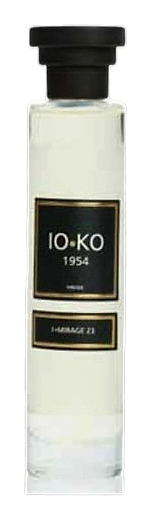
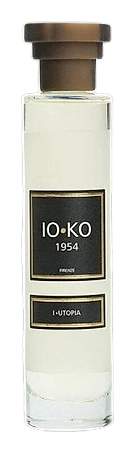
In 2017 Enzo Galardi set out to capture a paradox: the purity of a damask rose tangled with the depth of agarwood, spiced by saffron. I.Utopia emerged from his Florence studio as a study in contrast, a scent that feels both ceremonial and intimate. The name hints at an imagined perfect realm where rose and oud coexist without compromise, where spice does not overwhelm but sharpens the experience of beauty. Galardi, working within the IO.KO 1954 laboratory model of focused, single-note experiments, chose restraint over abundance, building I.Utopia layer by layer around specific material interactions rather than blanket effect.
The note selection in I.Utopia reflects Galardi's conviction that contrasts create meaning. Rose and oud are natural opposites, one floral and ephemeral, the other woody and dense. Saffron bridges them with its own duality, both spice and bitter, golden and dark. Cashmere and jasmine in the heart soften the edges without erasing them, allowing leather and patchouli to add weight without heaviness. By the drydown, the composition has resolved into its essential character: warm, smoky, and deeply personal, a fragrance meant to be worn close to the skin rather than announced across a room.
The evolution
The trajectory of I.Utopia mirrors a day moving from public to private. The opening is the city: rose in full bloom, oud smoking on a corner stall, saffron threaded through the air like news. By the time cashmere and jasmine arrive, the wearer has retreated indoors, settling into comfort and warmth. Leather and patchouli in the heart mark a transition from softness to substance, a reminder that intimacy requires texture. The drydown is night settling over the room: frankincense from a distant prayer, vetiver from the garden below, cashmere wood wrapping everything in a final, quiet embrace. Each stage carries the notes of the previous but transformed by time and temperature.
Cultural impact
Wearers describe I.Utopia as the perfume of the quiet rebel, a scent that feels at home in art galleries and late‑night lounges, drawing compliments from those who notice its rose‑oud heart. Its cultural resonance grew as it became a staple in underground art scenes, symbolizing a blend of classic romance and modern edge, and it has been referenced in several contemporary fashion editorials as a defining scent of the late 2010s, reinforcing its status as a quiet yet influential statement piece within niche perfume circles.