The Story
Why it exists.
The beginning
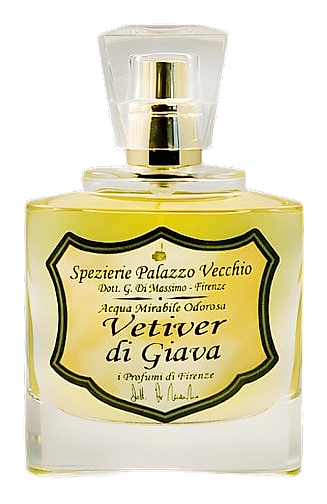
Vetiver di Giava arrived in 1989, one of the early compositions from I Profumi di Firenze, a Florentine house that translates Tuscan landscapes into bottled form. Giava was Java, a nod to the roots of vetiver, a grass long cultivated across South and Southeast Asia and used in perfumery for its deep, earthy grip. The release channeled that far-flung raw material through a lens closer to home: Italian herbalism, apothecary precision, and the aromatic vocabulary of Mediterranean gardens. Pine from the Casentino forests, bergamot from Calabrian groves, lavender and thyme from the Tuscan hills, all shaped into a masculine composition that read less like a tropical import and more like a long walk through an inland pinewood at dusk.
What makes Vetiver di Giava interesting structurally is the way it stacks green and resinous elements on the same axis. Pine resin and elemi sit in the same family of fresh, lemony terpenes, and pairing them with cumin, a note that skews warm and slightly animal, creates the tension that carries the composition. Vetiver itself acts as the bridge, its earthy, rooty depth pulling the bright top notes down into the woody base. Sandalwood and cedar finish the job, giving the drydown a softness that prevents the herbal spine from reading as harsh or overly sharp.
The evolution
The first fifteen minutes belong to the pine and bergamot, supported by a clean lemon brightness and a thread of cumin that hovers just beneath the citrus, warming it without taking over. Pine dominates, coniferous and dry, the way a forest smells after a long, hot afternoon. The citrus stays for an hour, then starts to fade, and the middle phase emerges: geranium and thyme replacing the top notes with a more herbal, slightly medicinal character. Lavender softens the thyme's sharper edges, and the white florals add a clean, almost soapy facet that keeps things from getting too rugged. The cumin sticks around through the heart, giving it warmth. By the third hour, the base begins to assert itself. Vetiver arrives earthy and grounded, elemi resin adds a subtle lemony frankincense note, and the sandalwood and cedar create a smooth, woody foundation.
Cultural impact
Vetiver di Giava occupies an understated space in the green-woody category, the kind of fragrance that gets discovered by people who have already cycled through the louder, more commercially visible entries and are looking for something quieter and more grounded. Wearers tend to describe it as a daytime and cooler-weather scent, one that reads as confident without effort. It shares territory with classic aromatic fougères but pulls more toward the herbal-woods end of the spectrum than the barbershop sweetness of the typical Mediterranean fougère.