The Story
Why it exists.
The beginning
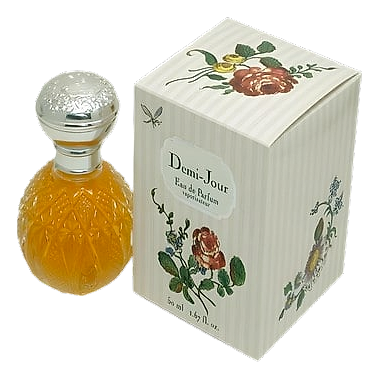
Demi-Jour arrived in 1987, a period when fashion-forward florals dominated the women's fragrance market. Houbigant, with centuries of refined femininity in its catalogue, chose a different path, not the bold statement of the era's blockbuster releases, but something intimate and enduring. The name itself is the clue: demi-jour, that liminal hour between day and night, when the light softens and something else takes over. The house was building a fragrance for that transition, quietly assured, not competing for attention. Houbigant's legacy of creating refined, classically elegant scents provided the foundation, but the intent was modern: a fragrance that would hold its own not through volume but through character. The aldehydic structure referenced a grand tradition, but the powdery florals brought it into contemporary territory.
The aldehydic structure is the key. These sparkling aromatic compounds, responsible for some of perfumery's most iconic openings, create a crystalline brightness that lifts the violet into something almost weightless. Houbigant didn't just include aldehydes as a nod to tradition; the house used them to create a specific effect: a fragrance that feels immediate and present, yet unfolds over hours with patience. The heliotrope and orris root in the heart add the powdery quality that defines the composition's character. This isn't powder as afterthought, it's powder as identity. The ylang-ylang provides warmth without tropical heaviness, while the jasmine and lily of the valley keep the florals from overwhelming.
The evolution
The aldehydes hit first, bright, effervescent, catching light like crystal. Bergamot adds a cool citrus sparkle at the edges, but the show belongs to the aldehydes lifting the violet skyward. The heart arrives gradually: rose and heliotrope together create warmth without sweetness, their powdery quality deepening rather than lightening. Ylang-ylang provides yellow floral depth, while jasmine and lily of the valley round the florals without adding weight. The hand-off is seamless, powdery violet evolves into powdery rose, and you barely notice the shift. Then the base takes over. Sandalwood and musk arrive together, creamy and warm, staying close to the skin like a secret. Cedar provides structure beneath, and oakmoss adds an unexpected earthiness that prevents the finish from going too soft. Hours later, a whisper of powder and orris lingers on fabric. This is a fragrance for wearing close, for those who want to be remembered by someone standing near them, not across the room.
Cultural impact
Arriving in the late 1980s, Demi-Jour sidestepped the bold aesthetics of its era. The composition's restraint and intimate sillage appealed to a different sensibility, someone who wanted to be remembered, not recognized. It occupies a specific niche: aldehydic florals for people who find Chanel No. 5 too loud but miss that entire vocabulary. The powdery, close-to-skin character makes it a quiet alternative in a noisy market.