The Story
Why it exists.
The beginning
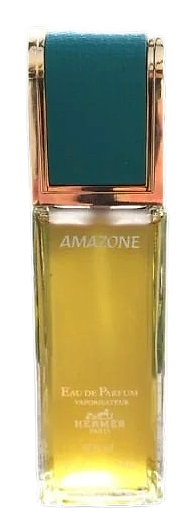
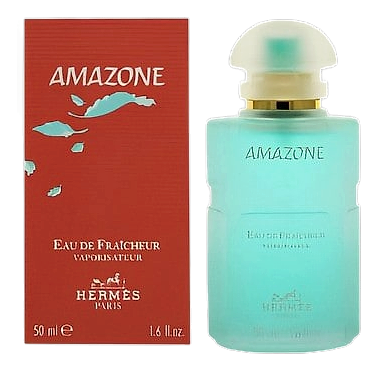
Hermès launched the original Amazone in 1974, a green floral that carried blackcurrant and rose into something new. By 1989, the house had revisited it. And in 1993, Amazone Eau de Fraicheur arrived as a different proposition entirely: lighter, fresher, but still unmistakably Hermès. The name carries weight. Amazone, the river, the myth, the woman who needs no rescue. This is fragrance as character study, not commodity.
What makes Eau de Fraicheur distinctive isn't subtraction, it's balance. The citrus top notes (bergamot, mandarin, blackcurrant, raspberry) don't compete with the florals; they illuminate them. Narcissus brings its yellow-floral earthiness. Jasmine and tuberose arrive creamy and present, never shrinking from the composition. Vetiver anchors the base with an herbal, slightly smoky warmth that prevents the whole thing from floating away. This is freshness with depth, the kind that lasts past the first hour.
The evolution
The opening is bright and immediate, citrus fruit that doesn't tease. Bergamot and mandarin lift the blackcurrant into something that reads as juiciness without sweetness. As the scent develops, the florals take center stage. Not gradually. Narcissus brings its yellow-green complexity while jasmine and tuberose build into something creamy and substantial. The fruit doesn't disappear, it recedes, becoming atmosphere rather than announcement. The woodsy base emerges as a quiet warmth that stays close to the skin. On fabric, it fades to a memory. On skin, it lingers as something you notice when you move. The drydown is intimate rather than announced, present, grounded, fading into your own chemistry rather than demanding attention from the room.
Cultural impact
Amazone Eau de Fraicheur arrived during a period when women's fragrances were shifting away from heavy orientals toward lighter, more modern interpretations. This release captured a moment when perfumers began treating freshness not as a novelty but as a legitimate end goal. The fragrance stands as a study in what can be achieved when a house commits to lightness without sacrificing substance. Its composition demonstrates that seasonal scents need not be throwaway exercises in minimalism, but can offer genuine complexity and staying power.