The Story
Why it exists.
The beginning
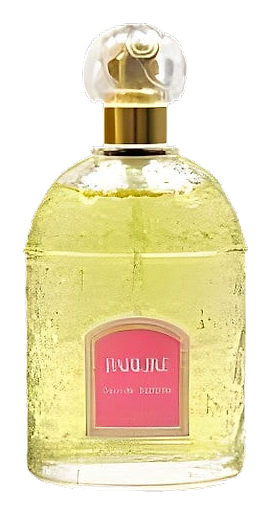
In 2000, Jean-Paul Guerlain created a fragrance for a name that meant business: Metallica. But the band Metallica had other ideas. A trademark dispute forced Guerlain to rename the juice to Metalys and relaunch it in 2005. Same formula, same Guerlain craftsmanship, just a name change. The story of the fragrance is inseparable from its legal drama, which is exactly the kind of thing that makes scent people lose their minds.
Guerlain has always been about legible beauty, compositions where you can pick out each thread without needing a scorecard. Metallica/Metalys is Guerlain doing exactly that. The carnation leads, not hiding behind anything. The orange blossom is present in volume. The iris and vanilla hold down the base with Guerlain's signature powdery warmth. It is, in the best sense, an old-fashioned perfume: well-made, confident, and willing to announce itself.
The evolution
The opening is bright, bergamot, grapefruit, orange blossom in that order. The citrus stays legible for about an hour. Then the florals take over, but not in a soft way. The carnation has a green, almost minty edge that keeps the heart from going completely sweet. The ylang-ylang and rose add volume, making the heart feel enveloping. By the second hour, the drydown asserts itself: vanilla and tonka bean, warm and close to the skin. The amber and musk hold it there, intimate and warm, for the next several hours. This is a slow fragrance. It develops on its own schedule, rewarding wearers who don't need instant gratification.
Cultural impact
Metallica/Metalys occupies an unusual position: a discontinued Guerlain that people actively hunt. The name change added to its mystique, it is the Guerlain fragrance that almost wasn't. Within the house's vast catalog, it stands out for its bold use of carnation, a note many houses use sparingly. The Guerlain approach, legible notes, classical structure, no tricks, is exactly what makes it special.
The House
GuerlainGuerlain stands as one of the oldest and most revered perfume houses in the world, founded in Paris in 1828 by Pierre-François-Pascal Guerlain. What began as a boutique on rue de Rivoli quickly became the preferred destination for Parisian society, attracting dandies and elegant women who sought custom-crafted fragrances. The house's influence grew to such heights that Guerlain earned the title of Official Perfumer to Napoleon III after presenting Eau de Cologne Impériale to Empress Eugénie as a wedding gift in 1853. This royal patronage marked the beginning of Guerlain's enduring association with European aristocracy, as the house went on to create fragrances for Queen Victoria and Queen Isabella II of Spain. Today, under the creative direction of Thierry Wasser, the fifth-generation perfumer, Guerlain continues to shape the landscape of fine fragrance with a portfolio spanning over 1,100 olfactory creations. The house remains headquartered at its legendary Champs-Élysées mansion, a historic monument that anchors Guerlain's position at the intersection of heritage and contemporary luxury.
The Creator
Jean-Paul GuerlainJean-Paul Guerlain's style resists easy categorization, though richness and depth define nearly every composition. He favored opulent oriental structures, warm woods and resins, and florals treated with almost sculptural precision.