The Story
Why it exists.
The beginning
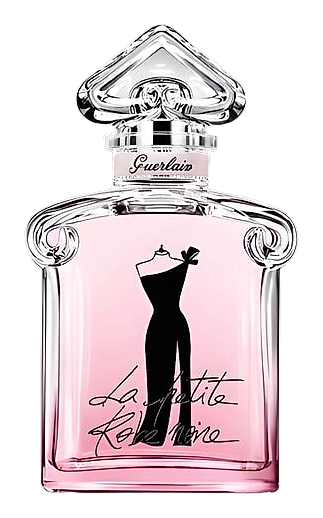
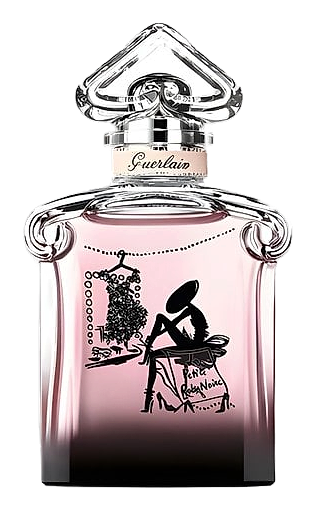
In 2014, Thierry Wasser revisited La Petite Robe Noire for a limited edition collector's bottle. The original LPRN had already established itself as Guerlain's modern statement on Parisian style, an electric reinterpretation of the house's classical elegance. The fluorescent pink and black collector's bottle, illustrated by Kuntzel & Deygas, became the visual argument: contrast as personality. The fragrance beneath it combines bright cherry and red berry notes with a dark rose and licorice heart, grounded by warm vanilla and tonka bean in the base. This interplay of light and shadow reflects the bottle's visual language, creating a scent that shifts between playful sweetness and deeper, more mysterious tones that linger close to the skin.
What makes this composition work is the black rose and licorice partnership. The combination creates something that reads as both floral and almost savory. The anise in the base reinforces this aromatic quality. Vanilla and tonka bean keep it wearable, but they're not calling the shots. The black rose takes center stage, its dark, assertive presence anchoring the entire fragrance and giving it a distinctive character that distinguishes it from more conventional floral arrangements.
The evolution
The opening bursts with cherry and red berries, bright, almost confected. Almond softens the edges, adding a marzipan warmth. Bergamot flickers briefly, a citrus whisper that fades before you've fully noticed it. Then the shift begins. The cherry sweetness doesn't disappear, it gets complicated. Black rose and licorice have taken over, and this is the shift that defines the fragrance. Black tea appears in the heart, adding a dusty, slightly bitter dimension that prevents the composition from becoming saccharine. The base arrives gradually: patchouli first, earthy and grounding, then vanilla and tonka bean swelling slowly beneath everything. The drydown is intimate. It stays close to the skin for hours, a warm, slightly powdery trail that someone standing near you might notice before you do.
Cultural impact
The 2014 limited edition of La Petite Robe Noire arrived with a fluorescent pink and black lacquered bottle, designed by the Parisian studio Kuntzel & Deygas. The bold visual statement stood apart from Guerlain's traditional heritage aesthetics, creating a collector's piece that appealed to fragrance enthusiasts seeking something distinctive. The contrast of the bright pink against deep black referenced the fragrance's own interplay of light and dark notes, from its fruity opening through to its deeper, more mysterious base.
The House
GuerlainGuerlain stands as one of the oldest and most revered perfume houses in the world, founded in Paris in 1828 by Pierre-François-Pascal Guerlain. What began as a boutique on rue de Rivoli quickly became the preferred destination for Parisian society, attracting dandies and elegant women who sought custom-crafted fragrances. The house's influence grew to such heights that Guerlain earned the title of Official Perfumer to Napoleon III after presenting Eau de Cologne Impériale to Empress Eugénie as a wedding gift in 1853. This royal patronage marked the beginning of Guerlain's enduring association with European aristocracy, as the house went on to create fragrances for Queen Victoria and Queen Isabella II of Spain. Today, under the creative direction of Thierry Wasser, the fifth-generation perfumer, Guerlain continues to shape the landscape of fine fragrance with a portfolio spanning over 1,100 olfactory creations. The house remains headquartered at its legendary Champs-Élysées mansion, a historic monument that anchors Guerlain's position at the intersection of heritage and contemporary luxury.
The Creator
Thierry WasserWasser gravitates toward green, crispy notes and the bold florals Guerlain is known for. Bulgarian rose appears repeatedly in his work, and he travels annually to oversee the harvest in Kazanlak.