
The Story
Why it exists.
The beginning
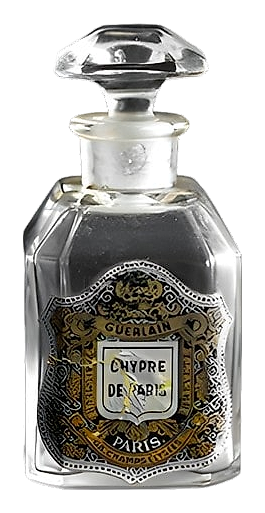
Chypre de Paris arrived in 1909, when bergamot, patchouli, moss, leather, and civet were being tested across Paris. These materials demanded honesty from the composition. The name says Paris, but the character is something older: the smell of a city before it learned to be polite about its animal nature. The citrus brightness of bergamot opens the composition with a crisp, almost bracing quality, while the moss adds an earthy-green depth that anchors the fragrance. Leather and civet bring an unexpected rawness, a reminder of the wild beneath the cultivated surface. Together, these notes create something that feels both timeless and slightly untamed, a fragrance that asks something of the wearer rather than simply pleasing.
Calamus adds a green, spicy dimension rarely attempted in perfumery. The floral heart layers iris, jasmine, rose, ylang-ylang, and orange blossom, a rich and complex combination that gives the fragrance unexpected breadth. Nutmeg and patchouli add warmth and spice, creating depth that balances the cooler top notes. The contrast between the cool bergamot-lavender opening and the warm civet base is the structural thesis of the entire composition.
The evolution
The opening is bergamot and lavender cutting through the air, clean, almost masculine, like a cold morning in the 6th arrondissement. Lemon and spice arrive quickly. The lavender cools everything, sharpening the citrus before leather enters, slightly green, slightly astringent, like skin meeting cold air. The heart phase arrives with jasmine, rose, and ylang-ylang fighting through the leather. Iris adds powder. Nutmeg brings warmth. Orange blossom sweetens the deal. Patchouli has been waiting in the wings. The composition thickens as florals layer over spice over earth. This is where it earns its name: the florals don't overpower, they complicate. The drydown is where the chypre structure reveals itself. Patchouli, Peru balsam, opoponax, the balsamic base arrives first. Then vanilla and musk, warm and close. Moss follows, late but essential, adding the earthy-green that defines the genre. And civet. The civet doesn't fade the way florals do. It deepens.
Cultural impact
Chypre de Paris doesn't argue for attention, it simply holds it. Above-average projection ensures a presence that stays with you throughout the day, lingering in cooler months and evening hours with particular ease. For those who understand what a true chypre requires, this is the reference. Leather and civet, structured around a century-old formula that still demands something from the wearer. The sillage builds subtly, announcing itself without shouting, making its presence felt in the most elegant way possible.