The Story
Why it exists.
The beginning
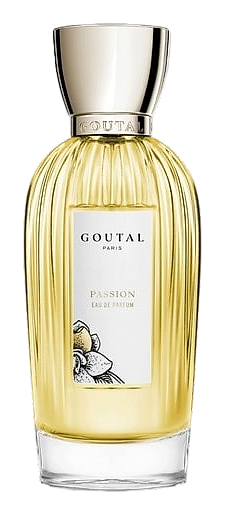
Annick Goutal created Passion in 1983 as a declaration of love, not subtle, not metaphorical, but named outright. The perfume was conceived as a tribute to passionate love itself, drawing on jasmine and tuberose from the south of France. A very French idea: saying the thing directly, then building an entire fragrance around it. The name was the brief. Everything else followed from there.
The choice of tuberose and jasmine together was deliberate, Annick Goutal wanted a dense, almost overwhelming floral heart that couldn't be mistaken for anything restrained. Ylang-ylang adds a tropical, custard-like warmth that thickens the composition further. What makes Passion unusual is the tomato leaf: a green, slightly vegetable note that cuts through the richness before the vanilla and oakmoss pull everything toward warmth and depth. It's the note that keeps the florals from becoming purely decorative.
The evolution
The opening hits immediately, green tomato leaf over tuberose, a combination that reads almost vegetable in its immediacy. Within minutes, jasmine and ylang-ylang arrive, swelling into something warm and creamy. The vanilla starts to surface around the 30-minute mark, sweetening the florals without softening them entirely. By the second hour, the oakmoss and patchouli have settled in, giving the composition weight and a faint mossy earthiness. The drydown holds close to the skin, warm, velvety, intimate. Moderate sillage means this isn't a room-filler. It's the kind of fragrance you have to lean in to appreciate. The vanilla and patchouli linger on skin and fabric for hours after application.
Cultural impact
Passion arrived in 1983 as Annick Goutal's second fragrance, a period when women's perfumery was embracing bold florals and emotional storytelling. The green tomato leaf opening was unusual for its time, challenging the more conventional aldehydic or citrus launches common in the early 1980s. Goutal's background as a pianist and model informed her approach, she treated each fragrance as a diary entry, a feeling translated into scent. Passion represented her more emotionally direct compositions, marking a shift from the more restrained aesthetics of her debut. The fragrance found its audience among women seeking sophisticated white florals with depth and character, establishing Goutal's reputation for creating emotionally resonant fragrances.