The Story
Why it exists.
The beginning
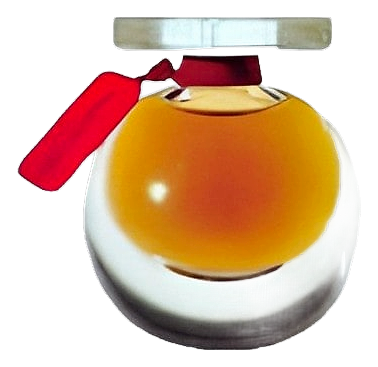
Red arrived in 1976, Geoffrey Beene's fragrance for women. Beene, who had studied chromatics and the psychology of color, picked red deliberately. He described it as both feminine and sensuous, a shade that arouses the senses. The fragrance that followed his line of thinking carried the same architectural precision he'd built into his tailoring: no wasted notes, aldehydes opening bright and soapy, peach and basil threading green through the top, a heart that piled eleven florals from carnation to violet into a dense, weighted mass, and a base of sandalwood, patchouli, labdanum, clove, and incense that grounded everything without ever overwhelming the wearer.
The composition reaches back to the grand chypres of the era, aldehydes and oakmoss stacked deep with florals and resin. What makes Red earn its place is the density of the floral heart, eleven notes from carnation to violet, set against a base of equal weight: sandalwood, patchouli, labdanum, clove, incense. It reads as a formula that uses every tool it has without crowding the result. Yet it never feels crowded.
The evolution
The opening is all shimmer, those aldehydes flashing bright and soapy over peach and basil, the citrus lifting the whole thing into something almost edible. The basil threads a cool green through the aldehydes, keeping the top from collapsing into powder before the florals arrive. As the aldehydes begin to recede, the florals take over: lily of the valley and carnation pushing forward, the narcissus giving it a cool green edge, jasmine and rose curving underneath. The orange blossom and ylang-ylang add a thin honey thread that stays through the heart, a sweetness that sits low rather than floating up. Once that floral core has spoken, the base takes its time settling in. Oakmoss and sandalwood emerge gradually, the clove warming up without ever sharpening, a faint powder and incense trailing behind.
Cultural impact
Red is one of those releases that perfume enthusiasts keep returning to, a chypre from the 1970s that still rewards revisiting. The formula carries an aldehyde density and oakmoss weight that define the style of its era, built with the materials and the confidence that defined that period of mainstream perfumery. Vintage bottles turn up through collectors and resellers because the scent captures something specific about its moment, a moment when chypres were a default rather than a curio.