
The Story
Why it exists.
The beginning
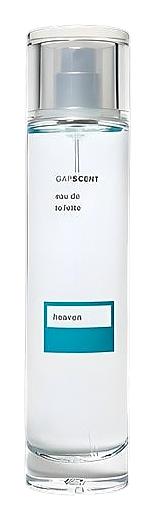
Heaven arrived in November 1994 as part of Gap's unprecedented four-fragrance launch, Grass, Day, Earth, and Heaven dropped simultaneously into a fragrance market that had never seen a mass-market retailer move with this kind of scale. Steven Claisse designed Heaven as the feminine counterpart to the more unisex releases, but femininity here didn't mean powder puff. It meant brightness: the smell of something clean, new, and quietly confident. The name said everything. This was not a scent trying to be exotic or distant. It was meant to feel like the best part of a Gap morning, casual, easy, and somehow exactly right.
What makes Heaven structurally interesting is how it refuses to commit to any single moment. The top is green, real green, leaf-crushed green, which most floral fragrances abandon entirely. That green doesn't disappear so much as it gets absorbed into the white florals as they open, so jasmine and lily of the valley arrive already grounded, already textured, never floating. The freesia is the quiet workhorse of the heart, keeping everything from tipping into sweetness. And the base, sandalwood and musk, is where Claisse pulled a small trick. The musk isn't creamy or animalic. It's clean. It stays close. It makes the drydown feel like you've been wearing it for years, not hours.
The evolution
It opens green and immediate, lemon zest over crushed leaves, orange blossom at its brightest. The first fifteen minutes are the most volatile, the airiness of the top notes threatening to disappear entirely if you spray too much. Then the white florals take over. Jasmine arrives first, followed by freesia, and for a stretch the fragrance exists in that soft, clean, almost aquatic middle that defines the heart phase. The carnation is subtle, a faint spice at the edges that keeps the florals from feeling flat. Then the handoff. Sandalwood anchors everything, and the musk rises to meet it. What was bright becomes warm. What was immediate becomes intimate. The drydown lasts four to six hours on most skin, projecting quietly, staying close. On fabric, it can hold for days.
Cultural impact
Heaven occupies a particular place in fragrance culture as a relic of an era when mass-market retailers could launch credible, widely worn scents without the luxury infrastructure. It's a fragrance people tend to remember with genuine warmth, often from their own adolescence or early adulthood. The white floral and clean musk combination has aged gracefully, feeling neither dated nor aggressively modern.
The House
GapGap fragrances represent an iconic chapter in American fashion fragrance history, born from the casualwear retailer that defined 1990s shopping culture. The brand's scent collection captured the accessible, democratic spirit of its parent company, offering fragrances that felt intimately tied to theGap shopping experience. Rather than positioning itself within luxury perfumery, Gap brought an approachable sensibility to fragrance, making scents that evoked wardrobe staples and everyday American moments. The collection gained particular renown for its ability to trigger powerful nostalgia, with fragrances like Heaven, Dream, and Grass becoming cultural touchstones that fans still seek decades later. Gap fragrances occupy a distinctive niche in perfume history, neither high-end niche nor drugstore basic, but something uniquely aligned with mall culture and mid-range American retail at its peak.
The Creator
Steven ClaisseClaisse favors a clean‑cut structure: a bright top, a clear heart and a subtle dry‑down. Citrus, green leaves and light spices dominate his openings, while heart notes often feature soft florals or aromatic herbs.