
The Story
Why it exists.
The beginning
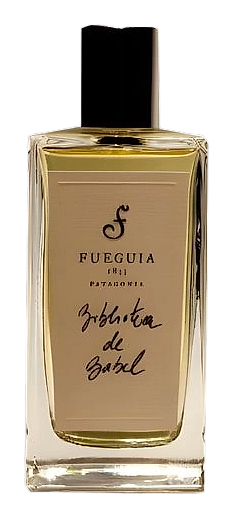
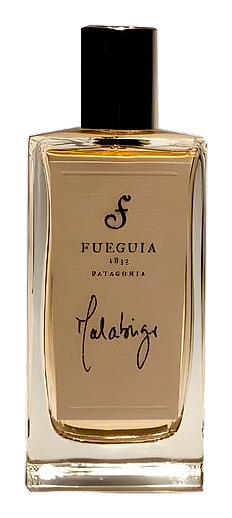
Malabrigo carries a layered identity, connected both to a women's cooperative in Uruguay known for fine fiber work and to the woolly fauna of the Patagonian steppe. Julian Bedel is the creative force behind Fueguia 1833, a house that has built a language around the creatures and landscapes of its region, treating each animal, each plant, each raw material as a way to evoke a feeling, a conversation, a continent. The brief drew on a vicuña, a small camelid native to the high Andes, prized since pre-Incan times for the extraordinary fineness of its fleece. Not the animal itself as a literal portrait, but the heat that rises from the fur of a creature adapted to altitudes where the air thins and everything else retreats.
Three woods do the heavy lifting, and that's the point. Palo santo opens with its sacred, church-cool resin smoke, a note that brings the hush of a chapel rather than the crackle of a fire. Cabreuva sits in the middle, a South American wood that carries its own woody weight, rounding out the composition with a quiet density. Cedar anchors the whole thing to earth, dry and steady. The fragrance sits comfortably in the Woody Floral Musk family, and the floral and musky facets that earn that classification come through in the interplay rather than as obvious accents.
The evolution
The palo santo arrives almost clinical in its clarity, cool, resinous, with a faint brightness that reads more chapel than jungle. The opening feels stripped back, as though the fragrance is clearing its throat before settling in. Within the first stretch of wear, cabreuva takes the wheel, and the scent rounds out into something softer, with a green-leaning sweetness that softens the initial austerity. The cedar doesn't really announce itself early. It just settles in gradually, pulling the smoke down into something close to the skin and slightly warmer as the hours accumulate. The animal warmth the collection promises lives in the drydown, in the interplay between these three woods and body heat, and in the cashmeran note that hums underneath. Late in the wear, what remains is a low, persistent hum of cedar and faint musk, close to skin, intimate but unmistakable.
Cultural impact
Within the niche world, Malabrigo has earned a quiet following among wearers who gravitate toward woody compositions with a clear point of view. Reviews tend to describe it less as a perfume and more as an atmosphere, the kind of scent that gets associated with a specific coat or a specific winter rather than a specific outfit. The Patagonian sourcing angle gives the fragrance a geographical specificity that many woody fragrances lack, and wearers respond to that rootedness. It's the kind of scent that rewards cold weather and close quarters, holding its character without needing to project aggressively.