
The Story
Why it exists.
The beginning
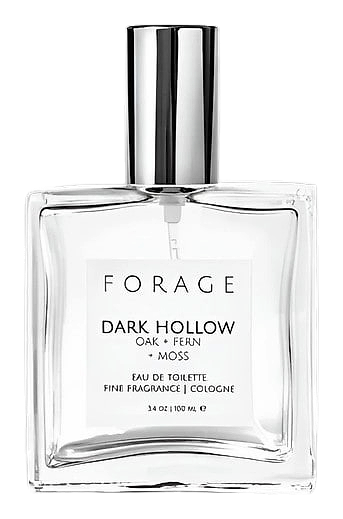
Dark Hollow launched in 2019 as a Forage eau de parfum. No perfumer or official inspiration is documented, so its listed notes provide the clearest guide to the composition. Fern and Green Leaves establish the green opening, bringing a fresh, leafy character before Wild Rose introduces a floral pulse. Oakmoss deepens that greenery with an earthy, woody quality. Together, these notes create a fragrance centered on the contrast between fresh vegetation, rose, and darker woody materials, with a composition that moves beyond a simple garden effect.
The interesting part is the collision. Fern and Green Notes can feel fresh and alive, but Oakmoss pulls the composition toward earth and shaded bark. Wild Rose then adds a living floral pulse, keeping the heart from becoming purely green or woody. By the base, Sandalwood, Amber, Musk, Oak, and Conifer give that contrast a rounded, woody and aromatic frame. The result reads less like a conventional floral and more like a layered composition of greenery, earth, rose, wood, and soft warmth.
The evolution
The opening has the cool, leafy character of Fern and Green Leaves. Soon, Wild Rose and Oakmoss become more prominent. The rose gives the composition its floral pulse, while moss deepens the brightness with an earthy, woody quality. In the drydown, Sandalwood, Oak, and Conifer create a steady woody frame. Amber adds warmth underneath, and Musk rounds the finish without making the composition overtly sweet. The profile moves from green freshness toward a quiet woody chypre impression, with rose, moss, sandalwood, oak, conifer, amber, and musk remaining central to its character.
Cultural impact
Dark Hollow can be understood through its composition rather than through a documented cultural or literary context. Fern, Green Leaves, Wild Rose, and Oakmoss create an opening balance of greenery and floral character, while Sandalwood, Oak, Conifer, Amber, and Musk develop the darker woody foundation. That combination gives the fragrance a distinctive position within green, floral, and woody compositions, inviting attention to the way individual notes shift from freshness to earth, rose, wood, and warmth.