The Story
Why it exists.
The beginning
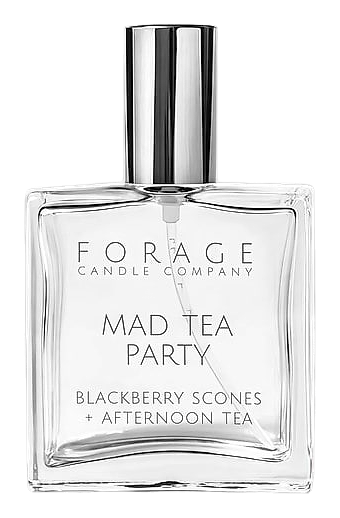
Mad Tea Party is a Forage Eau de Parfum, and its title suggests a whimsical gathering while the composition takes that idea somewhere more grown-up. White tea, saffron, and apple form a polished beginning, followed by blackcurrant, blackberry, vanilla, patchouli, and amber. Those later notes give the scent warmth and weight, pulling the fragrance toward something dark, earthy, and slightly unruly. The listed materials create the impression of fruit served beside a fire after rain rather than afternoon tea in a pristine parlor. That tension is the fragrance's appeal: a measured, atmospheric composition that balances sweet fruit, tea, spice, vanilla, and earth without becoming a straightforward dessert recreation.
The unusual tension comes from placing fruit and vanilla beside tea, spice, patchouli, and amber. White tea gives the opening a light, airy impression, while apple, blackcurrant, and blackberry develop a layered fruitiness with both crisp and dark profiles. Blackberry adds depth, and vanilla softens the sharper edges without erasing them. Patchouli is the turn that matters. Its earthy, faintly smoky footing gives the sweet materials structure and keeps the composition from becoming syrupy. Amber deepens that warm foundation as the scent dries down.
The evolution
Mad Tea Party begins with a clean white-tea lift, sharpened by saffron and the crisp bite of apple. That opening feels light and polished, almost like a first sip taken in a cool, quiet place. Soon, blackcurrant and blackberry introduce darker fruitiness, and vanilla rounds the edges without losing the contrast. As the composition settles, patchouli and amber take over with earthy warmth, leaving the fruit less obvious and more atmospheric. The sweet notes remain as a soft trace, while the tea gives way to a faint metallic, woody, and smoky impression. Through the drydown, the scent grows warmer and more amber-and-earth than fresh fruit. It lingers as a polished afterimage, with the final impression resting on vanilla, patchouli, amber, and soft wood rather than a loud sweetness.
Cultural impact
Mad Tea Party pairs a literary title with a modern sweet-and-earthy fragrance profile. The composition moves between light tea notes, fruit, vanilla, spice, patchouli, and amber, creating a mood that can feel polished, warm, and slightly unruly. Its appeal lies in the contrast: familiar fruit and vanilla are placed beside tea, earthy patchouli, and warm amber, so the scent shifts rather than remaining purely sweet. Close attention reveals how the opening settles into a darker, more atmospheric drydown while softer notes remain underneath.