The Story
Why it exists.
The beginning
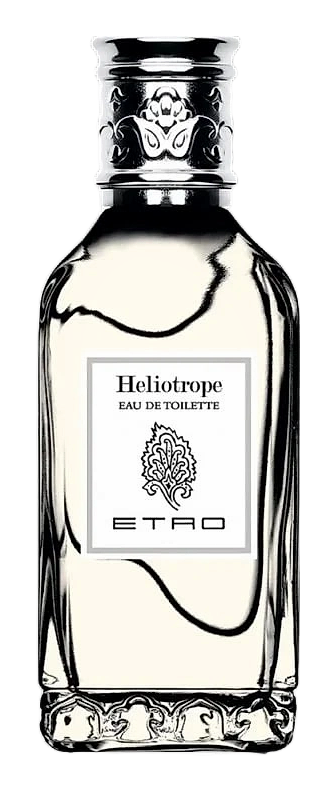
Robertet created Heliotrope for Etro in 1989, a period when the Milanese house was solidifying its identity around bold textile prints and artisanal craftsmanship. The brief was clear: extract the marzipan-almond sweetness that defines heliotrope flowers and elevate it into something worth wearing year-round. Rather than rely on heliotrope as a named ingredient, Robertet reconstructed that impression through iris, tonka, and vanilla in the base, with almond bridging the gap between citrus opening and floral heart.
The note selection reflects a philosophy of layered sweetness rather than straightforward gourmand construction. Almond, tonka, and vanilla all read as sweet elements, but they occupy different registers: almond is nutty and slightly bitter, tonka is coumarin-rich and hay-like, vanilla is warm and creamy. By pairing these with iris powder and balsamic resins, Robertet avoided the trap of making something that smells like candy. The composition reads as sophisticated because each sweet note has texture and restraint.
The evolution
The fragrance moves through distinct phases that feel intentional rather than accidental. Bergamot and petitgrain create a refreshing, slightly bitter citrus opening that prevents the composition from becoming too sweet too soon. As the top notes fade, iris emerges as the structural backbone, its powdery orris quality holding space for jasmine, rose, and ylang-ylang to bloom. The transition into the drydown marks the longest and most satisfying phase, where balsamic sweetness gradually replaces floral brightness, leaving tonka, vanilla, and musk as the lingering signature.
Cultural impact
Heliotrope arrived in 1989 as one of Etro's earliest fragrance statements. Its powdery-sweet gourmand character reflects late 1980s fragrance preferences. The fragrance holds appeal among those drawn to almond-forward compositions, offering a distinctive alternative to louder scents.