
The Story
Why it exists.
The beginning
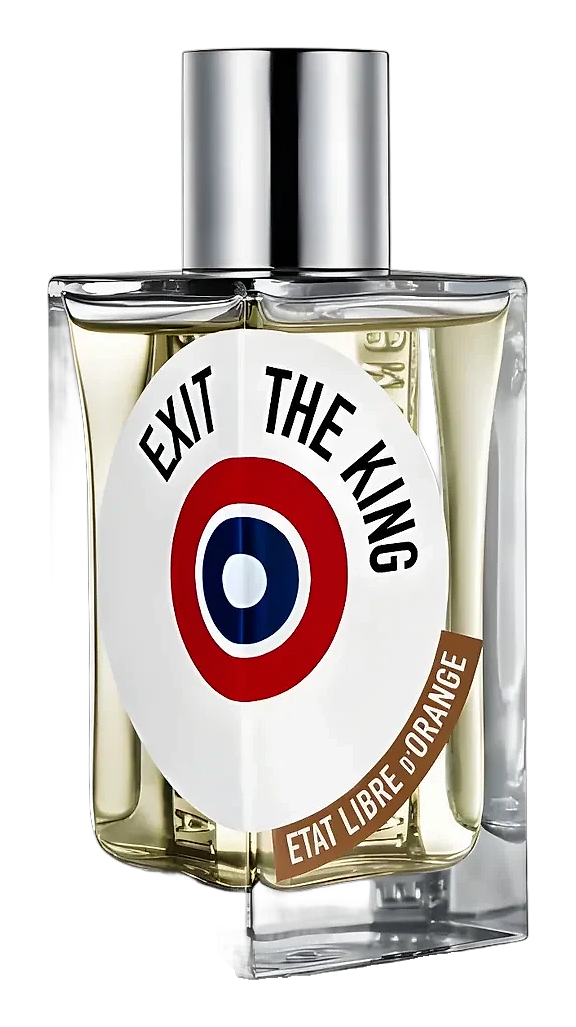
Exit The King arrived in 2020 from Cécile Matton and Ralf Schwieger, two perfumers who understand that chypre is not a relic, it's a structure. The name alone announces its intent: a departure from what ruled before. The brand's own copy frames it as a story of leaving old norms for a new world, of freedom and discovery. Whether that world is better is left to the wearer to decide.
What makes Exit The King chemically interesting is the sustained aldehydic character throughout the wear. In most fragrances, aldehydes arrive and fade within the opening minutes. Here, they persist, soap-clean, luminous, almost crystalline, as the florals build on top of them rather than replacing them. The result is a composition that stays cohesive from first spray to final drydown, held together by that persistent foamy thread. Moss absolute and patchouli provide the classic chypre skeleton, while Orcanox adds a warm, ambery woodiness that modernizes the base without betraying it.
The evolution
The opening is immediate: aldehydes and soap creating that crystalline clean impression. Some find it almost clinical in its precision. Within minutes, pink pepper and Timur add a subtle botanical sharpness, woody, slightly lemony, keeping the aldehydic brightness from flattening entirely. The heart phase brings rose and jasmine into bloom, but these are not romantic florals. They're luminous, waxy, almost transparent. The petals catch light but don't overpower. The drydown is where Exit The King earns its chypre designation. Moss absolute, patchouli, and sandalwood build an earthy, slightly animalic foundation that finally tempers the earlier cleanliness. Ambroxan adds a clean, almost ozonic quality that extends the wear. The sillage stays moderate, this is not a fragrance that fills a room, but one that rewards proximity.
Cultural impact
Exit The King occupies a unique position for those who actively seek compositions that challenge rather than comfort. Its aldehydic character makes it polarizing: some find it reminiscent of vintage formulations, others detect a slightly synthetic quality that feels contemporary. But for those whose taste runs toward the unconventional, Exit The King offers something increasingly rare: a modern chypre that earns its structure.