
The Story
Why it exists.
The beginning
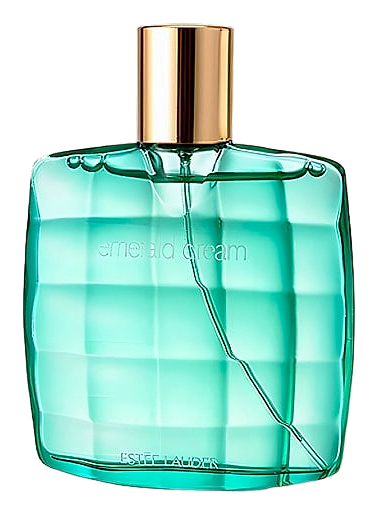
Estée Lauder launched Emerald Dream in 2006, a time when the fragrance world was still finding its footing in the post-y2k landscape. The name itself is a declaration, emerald as a color of aspiration, of something rare and precious. The brief seemed to be: capture the feeling of a woman stepping into her own, confident enough to choose something green and alive over something safe and familiar. The brief seemed to be: capture the feeling of a woman stepping into her own, confident enough to choose something green and alive over something safe and familiar. The famous emerald-green liquid isn't just aesthetic, it's the visual promise of what's inside: fresh, herbal, alive.Estée Lauder launched Emerald Dream in 2006, a time when the fragrance world was still finding its footing in the post-y2k landscape. The name itself is a declaration, emerald as a color of aspiration, of something rare and precious.
The note pyramid is unusually wide at the top, four ingredients competing for attention, and that initial burst is intentional. Apricot brings sweetness without being cloying. Tangerine adds brightness. Honeysuckle brings the characteristic headiness of the flower itself. And basil? Basil is the surprise. It's herbal, slightly medicinal, green in a way that feels like crushed stems rather than synthetic 'green' accords. The heart layers six florals, but the dominant notes are mimosa and cyclamen, both yellow, both with a soft, powdery quality that keeps the heart from being too shouty. The iris and violet add powder. The orchid adds body.
The evolution
The opening hits bright and fruity, apricot and tangerine with basil cutting through like a green knife. Thirty seconds in, the honeysuckle arrives and the whole thing softens, becomes more rounded. The basil doesn't disappear; it settles into the background, adding structure without dominating. The heart takes over around minute five. This is where the magic happens, mimosa, cyclamen, iris, violet, orchid, plum, six florals that somehow don't muddy each other. They layer into something powdery and warm, the kind of scent that reminds you of a grandmother's vanity but somehow doesn't feel dated. The base is where things quiet down. Cypress and sandalwood arrive around hour two, cooling everything off, adding a woody transparency that keeps the florals from overwhelming. By hour four, you're left with a soft, powdery warmth, sandalwood and violet, close to the skin, intimate. On fabric, the sillage is better, you catch hints of it throughout the day. On skin, it stays close, a quiet companion rather than a statement piece.
Cultural impact
Emerald Dream arrived in 2006, a moment when the fragrance industry was still navigating the shift away from the heavy, sweetorientals of the 1990s and toward lighter, fresher compositions. It found its audience among women who wanted something green and floral without being boring, the kind of fragrance you wear to a garden party or a Saturday brunch. The name itself suggested aspiration, rarity, something precious. While it's since been discontinued, it remains a quiet cult favorite among those who remember it, a reminder that not every great fragrance needs to fill a room to leave an impression.