The Story
Why it exists.
The beginning
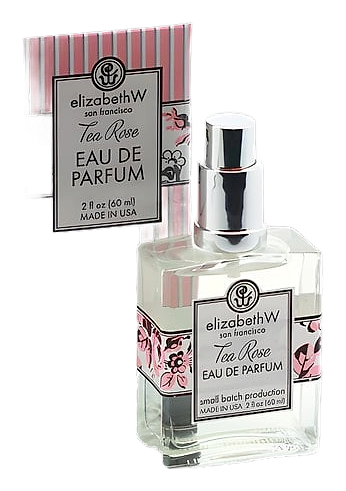
Tea Rose comes from elizabethW, a fragrance house with a clear point of view. The composition reads as one of its more literal gestures: a rose that hasn't been prettied up, bottled at the moment it still has thorns and dirt on its stems. The fragrance leans into wild rather than cultivated, green rather than velvety. The notes listed are Wild Rose, Green Notes, Wild Berries, and Hawthorn, which tells you almost everything you need to know before you even spray it. There's no orris powder smoothing the edges, no sugary syrup pulling it toward confection. What you get instead is something thorn-adjacent, something that smells like a rose before it was ever picked.
What makes Tea Rose interesting is the choice to anchor a rose composition not in the plush, candied materials most rose fragrances default to, but in the rawer, more aromatic ones. Wild Rose, Forest Berries, Hawthorn, and Green Notes make up the structure, and that lineup alone sets expectations. Hawthorn in particular does serious work here. It carries a tart, leafy quality that sharpens everything around it. Paired with the snap of crushed green notes, the rose never gets to become that velvety, romantic thing most rose fragrances aspire to. It stays pointed.
The evolution
The opening hits immediately, and it hits green. Forest berries and hawthorn arrive first, tart and bright, with a leafy sharpness that reads less like a garden in June and more like a hedgerow after light rain. For the first 15 or 20 minutes, the rose is barely a whisper behind all that sharp foliage. Then something shifts. The green settles, the wild rose opens fully, and the berries sweeten just enough to feel edible without going jammy. This is the heart, and it lasts the longest, maybe two to three hours of that lifted, almost-giddy floral-fruital energy. On skin, the drydown surprises. The green doesn't vanish; it just moves. The hawthorn and the leafy edge stick around underneath, keeping the rose honest, keeping it wild. Hours later, what's left smells like the memory of berries and a persistent green resin, an earthiness rather than a sweetness.
Cultural impact
Tea Rose sits within elizabethW's wider botanical project, where each scent is a study of one plant rather than a commentary on style. It doesn't reach for the plush, romantic register that dominates so many rose fragrances, the kind built on damask absolutes and candied petals. Instead it leans on Wild Rose, Wild Berries, Hawthorn, and Green Notes, a combination that points outward toward the places roses actually grow rather than inward toward the perfumer's idea of what a rose should be. That choice puts it in conversation with the brand's own Magnolia, Lilac, and Tuberose, each one a piece of the same project.