
The Story
Why it exists.
The beginning
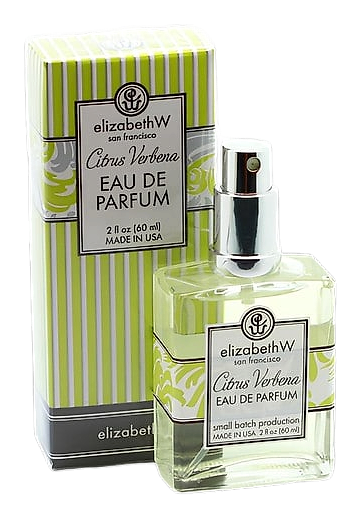
Citrus Verbena landed in the early 2000s, during the foundational years of elizabethW. Verbena was a familiar botanical, the kind that shows up in tisanes, infused oils, and pantry remedies passed between neighbors. Nichols translated that everyday familiarity into something leaner and more architectural, stripping the plant to its essential notes and letting them speak in their own proportions. The composition reads as a study in clarity: a citrus-led opening where grapefruit and lemon verbena arrive in near-simultaneous brightness, the pithy edge of one softened by the green lift of the other. Mandarin rounds in quickly, not to blunt the sharpness but to give it body, the way sunlight through a window has weight.
What makes this composition interesting is its restraint. Where most verbena-led fragrances pile on sweetness or green sharpness, this one stays relatively thin and clean, letting the grapefruit pith and mandarin brightness carry the brightness without a sugar coating. The green notes underneath provide structure without weight, like the stem of a plant you've just pulled from the garden.
The evolution
The first thirty minutes are almost all sparkle. Grapefruit and lemon verbena hit simultaneously, sharp enough to make your eyes adjust, then the mandarin rounds in to take the edge off. There's something faintly herbal underneath, almost like crushed stems more than leaves. The middle phase quiets things down without losing the lift. The citruses don't vanish so much as thin out, and what remains is a clean, slightly soapy trace of green, drier now, closer to the skin. A faint sweetness creeps in at this stage, the kind that reads more as warmth than sugar, like verbena leaves sun-warmed in a glass. The transition happens almost without notice, more a gradual softening than a shift. What lasts isn't the verbena itself, it's the green: a quiet, woody-tea impression, like the memory of the plant rather than the plant itself. Not a powerhouse.
Cultural impact
Citrus Verbena sits within elizabethW's botanical-leaning catalog as a citrus-and-herbal composition that prizes transparency and proportion. Verbena itself has long occupied a quiet place in fragrance, a green note often relegated to supporting roles in fougères, colognes, and aromatic compositions where it lends lift without demanding attention. Citrus Verbena reverses that hierarchy, placing verbena at the center and building the citrus architecture around it. The result reads as modern in the most unfussy sense of the word: no heavy orientals, no dense gourmand base, no chasing of whatever's trending that season.