The Story
Why it exists.
The beginning
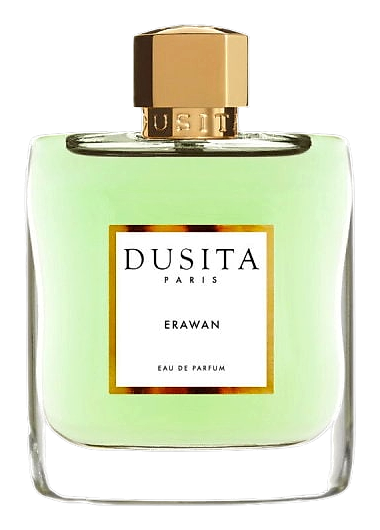
Erawan takes its name from Erawan, the celestial palace in Thai mythology, home of thedevata, or divine nymphs, said to inhabit gardens of impossible beauty. Pissara Umavijani drew from her Thai heritage for this one, naming the fragrance after that mythological realm where the earthly and the delicate blur. The brief was simple: translate the feeling of late summer, not the heat, but the aftermath. The fields after the cutting. The warmth left in the soil. Dusita's literary, poetic sensibility runs through every note here, but Erawan is among the most grounded of the house's creations, less abstraction, more sensation.
What makes Erawan unusual is the hay-vetiver pairing at its center. Hay is rarely used as a named heart note, it's the smell of something most perfumers imply with accord work rather than declare outright. Here it's front and center, rendered in full: warm, dry, slightly sweet, with the ghost of cut grass underneath. Haitian vetiver amplifies the earthiness without going smoky, and the vanilla doesn't sweeten so much as soften, like cream stirred into a hot cup, not added for dessert. The result is a fragrance that smells like a specific place and time, not a mood board.
The evolution
Petitgrain and clary sage arrive first, clean, aromatic, a little bitter in the way fresh herbs are when you crush them between your fingers. Within twenty minutes the hay enters, and the composition shifts. The green becomes warmer, rounder, less cutting. Vetiver and vanilla arrive together around the one-hour mark, creating a creamy aromatic heart that feels like the inside of a barn door left open in afternoon light. Cedar and tonka bean arrive last, settling into the base around hour three and staying close to the skin for the remaining five to seven hours. Oakmoss keeps everything grounded, earthy, slightly mossy, a quiet exhale rather than a statement. On fabric it lingers longer than on skin. The next day, faint cedar and vanilla remain, like the ghost of a warm afternoon.
Cultural impact
Erawan represents a quiet shift in Western appreciation of Thai-inspired perfumery, moving beyond the expected coconut, jasmine, and tropical fruit tropes that dominate most Thai-inspired fragrances. Dusita founder Pissara Umavijani draws from her Thai heritage to invoke hay, vetiver, and clary sage, plants rooted in both agricultural tradition and the specific landscape of her homeland. The fragrance arrived during a period when niche perfumery was expanding rapidly, giving collectors a work that felt genuinely distinct from both mass-market releases and the established canon of French fine fragrance.