The Story
Why it exists.
The beginning
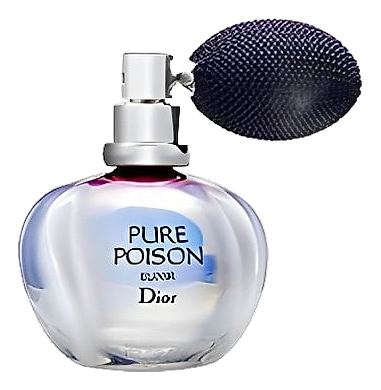
Pure Poison arrived in 2004, composed by Carlos Benaïm with input from Dominique Ropion and Olivier Polge. The juice takes orange blossom, jasmine, and gardenia and treats them with unusual clarity, less the dense white-floral blowout some houses default to and more something that reads as sheer, almost weightless on skin. Benaïm's hand is calibrated. Nothing in the accord is allowed to dominate for long, which means the orange blossom keeps its bitter edge, the jasmine stays clean rather than turning soapy, and the gardenia never crosses into the creamy territory that flatters it into something heavier than intended. The citrus opening is bright but not sharp, and it holds long enough to let the florals arrive on a lifted, almost breezy current rather than crashing in.
What makes the composition work is restraint at the top. Pure Poison does the opposite of leaning into density from the first spray. Bergamot and orange open with a clarity that makes the jasmine read as sheer, not dense. Gardenia enters as a whisper rather than a statement, which lets neroli's green brightness cut through instead of vanishing under sweetness. That neroli-orange blossom-green facet is what keeps the heart from collapsing into the same white-floral blur you find in so many launches from this era.
The evolution
The first fifteen minutes are almost startling in their clarity. Bergamot and orange zest hit cold and clean, a bracing citrus duo that feels more like chilled fruit than candied peel. Mandarin adds a sweet undercurrent that keeps the citrus from feeling austere, rounding the zest with just enough juice to soften the edges without dulling them. Then the white florals arrive, and they don't creep in gently. Jasmine becomes the dominant voice as the opening citrus recedes, but it's a soapy, clean jasmine rather than the dense, indolic version that defines heavier floral-oriental compositions. Gardenia softens the edges, adding a creamy dimension that prevents the composition from staying sharp. Neroli appears in the transition, that green-orange-blossom note that bridges citrus and floral with an herbal lift. As the hours pass, the base starts asserting itself.
Cultural impact
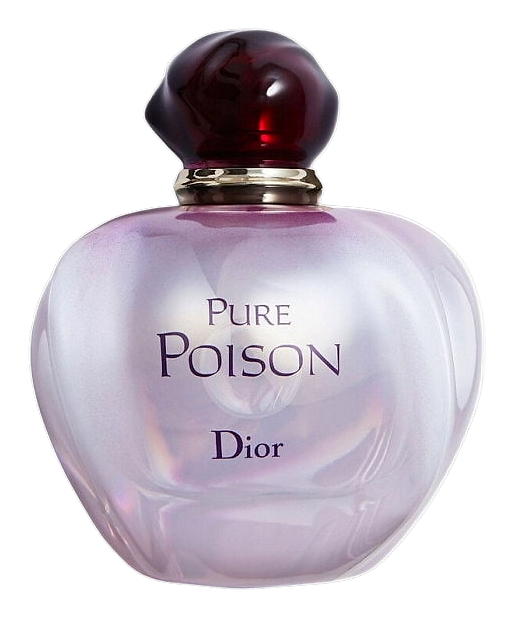
Pure Poison joined Dior's lineup in 2004 and quickly became a recognizable name in department store fragrance assortments. The bottle, designed by Véronique Monod, helped cement its place, a tall, faceted flacon that read as jewelry on a vanity. The juice itself leans into a clean, luminous register that distinguishes it from the heavier orientals associated with the broader Poison family. Wearers gravitated toward it for occasions that called for something polished and feminine without veering into the dense sweetness that defined so many early-2000s florals.