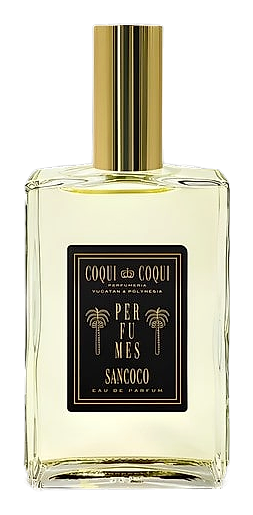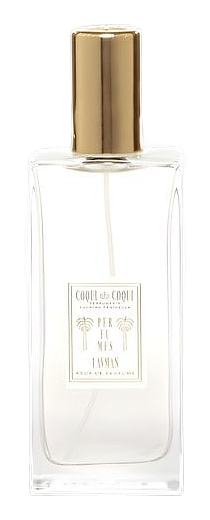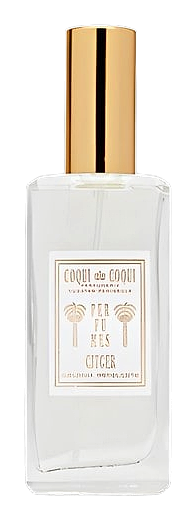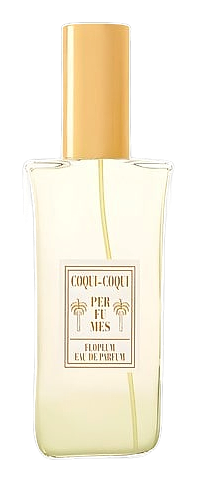


The Story
Why it exists.
The beginning
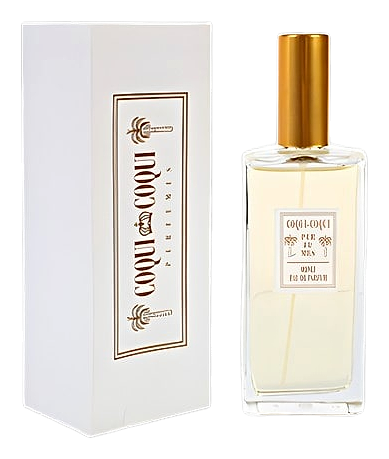
Flor de Mayo launched in 2012, the work of Nicolas Malleville. Malleville built the composition around frangipani, the tropical blossom that carries an unmistakable presence in warm-climate landscapes across the world. The fragrance was designed to capture the bloom at its most generous, when the white flowers take over, unapologetically sweet, heavy with heat and sunlight. Frangipani's natural architecture is the composition's foundation, a note that rarely needs much scaffolding to deliver its message. The result is a scent that reads like a study in tropical floral excess, the kind of juice that asks you to lean in rather than step back.
What makes the composition interesting is its restraint inside excess. Frangipani is one of perfumery's louder white florals, lactonic and tropical, the kind of note that overwhelms most structures. Here it shares space with jasmine, which adds a sharper, indolic edge without flattening the creamier facets of the plumeria. The effect is a white floral with backbone. Rather than layering the pyramid with competing sweetness, the formula lets frangipani serve as both heart and base, a structural decision that gives the scent its particular character.
The evolution
Flor De Mayo was composed by Nicolas Malleville and released in 2012. Where many white florals chase complexity through layered accords, this one commits almost entirely to plumeria, with jasmine stepping in only to sharpen the edges. The result reads less like a constructed composition and more like a single generous bloom held close to the nose. Over the years it has become one of the defining scents in the brand's catalog, the fragrance that most directly states what white floral territory means to the house. The scent holds its tropical confidence from opening to close, never apologizing for its sweetness or pulling back from its own intensity. Wearers tend to encounter it as a complete statement rather than a study in gradual reveal, and that commitment is part of what makes it memorable.
Cultural impact
Within the brand's own catalog, the scent reads as one of its more direct floral statements. The composition commits fully to white floral territory, and within that category it makes few apologies for its own sweetness. It appeals to anyone drawn to tropical perfumery who wants their florals generous rather than restrained, plumeria delivered with the jasmine underneath doing its quiet work. The juice doesn't try to be everything at once, and that clarity gives it a specific kind of appeal. Wearers who want tropical without dilution tend to gravitate toward this kind of composition, and Flor De Mayo delivers on that promise without hedging.
The House
Coqui CoquiCoqui Coqui Perfumeria is a Tulum-born fragrance house rooted in the Yucatan Peninsula, creating scents that translate the raw beauty of its jungle and coastal landscape into wearable form. Founded by Nicolas Malleville and Francesca Bonato, the brand operates as both a perfume house and a collection of residences and spas scattered through the region. The collection centers on unisex compositions that favor earthy, botanical, and aromatic materials, drawing directly from the environment that surrounds the properties. Each fragrance carries the name of a local material or place, anchoring the work in the specific geography of southeastern Mexico. The brand remains relatively small in scope, with production tied closely to its Yucatan home rather than distributed through conventional retail channels.
The Creator
Nicolas MallevilleMalleville works with raw, plant-forward materials and minimal synthetic intervention. His signature favors tobacco, woods, and resins that express their geographic origins.