
The Story
Why it exists.
The beginning
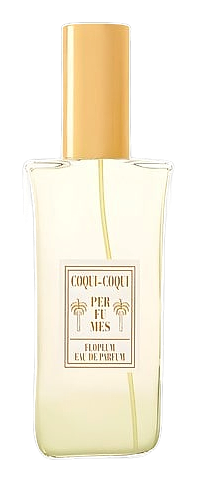
Floplum comes from Coqui Coqui, the perfumery shaped by Nicolas Malleville, who works as the brand's nose. The line draws on environments influential to his practice, a stretch of Yucatán jungle and coast where flowers open heavy with humidity and the air never fully dries. The compositions anchor scent to place and material, taking their names from the surroundings that feed them. Floplum, also listed as Flor de Mayo, draws directly from the frangipani trees scattered across the region, the ones that drop waxy white petals onto stone paths. It's a way of bottling what the landscape already offers, with every accord pulled from a specific bloom, tree, or stretch of land rather than constructed in the abstract.
Frangipani carries a soft, almost sun-warmed presence, the kind of tropical floral that feels more lived-in than ornamental. The composition lets jasmine and orchid add weight and structure, two materials that lend body to a flower that can otherwise feel fleeting. The result is a white floral that feels closer to the actual tree than to any laboratory recreation, rich without veering into sweetness, creamy without crossing into soapy territory. The jasmine brings a heady, almost indolic warmth, while the orchid smooths the edges and extends the wear.
The evolution
The frangipani arrives immediately, waxy and almost fruity, the way the flower smells in late afternoon when the sun has been on the petals for hours. Within the first half hour, jasmine folds in, bringing that indolic edge that pushes the frangipani away from anything resembling a sun lotion. Orchid softens the transition, giving the heart a creamy, almost yogurt-like texture. The drydown settles into a powdered, lactonic warmth, the white florals blurring into something that smells more like skin than like any individual flower. On fabric, traces of that cream linger into the next day, faint but unmistakable.
Cultural impact
Floplum sits within a catalog of place-named compositions, each one tied to a specific material or location in the Yucatán. It appeals to wearers who want white florals without the overt sweetness of mainstream options, and who value a scent that whispers rather than projects. The brand offers the fragrance in the environment that informed it, an unusual context for a commercial perfume and one that reinforces the connection between scent and setting. Wearing it feels like carrying a small piece of the landscape with you, a reminder of humid afternoons and blooming trees translated into a personal, skin-close accord.