The Story
Why it exists.
The beginning
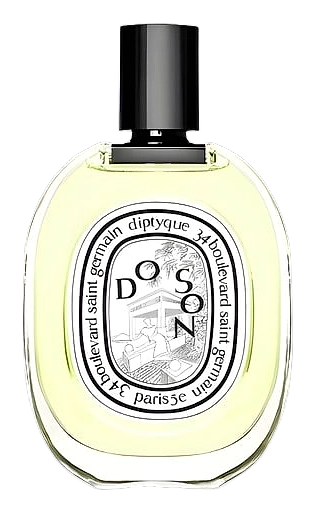
Diptyque began as a fabric and decor boutique on Paris's Boulevard Saint-Germain in 1961, founded by three artists. Their foray into scent came in 1963 with scented candles, and the first fragrance, L'Eau, arrived in 1968. The house has always been anchored in artistic sensibility and a love of narrative. For Do Son, released in 2005, perfumer Fabrice Pellegrin crafted a white floral that captures the paradox at the heart of Diptyque: flirty florals, yes, but with an intellectual backbone. The combination of African orange flower and iris creates an immediate tension between creamy sweetness and powdery restraint, making Do Son feel both lush and composed. The inclusion of benzoin in the drydown ensures warmth without heaviness, a quality that has kept this fragrance relevant for nearly two decades.
Do Son works because of contrasts that feel organic rather than calculated. The creamy florals of African orange flower and tuberose are grounded by powdery iris and warm benzoin, creating complexity through opposition rather than addition. The pink pepper in the heart adds texture without spice that dominates, functioning as a bridge between the fresh opening and the warm base. The fragrance philosophy here reflects Diptyque's broader approach: treating scent as narrative, where each bottle represents a chapter in an ongoing story.
The evolution
Do Son opens with African orange flower arriving bright and almost bitter, its freshness cutting through the expected sweetness of white florals. Rose joins to soften the opening, creating a clean floral impression that feels immediate and confident. The pink pepper in the heart adds a subtle aromatic element that keeps the composition from feeling purely feminine. As tuberose blooms, the scent deepens into something creamier and more deliberately lush, but the powdery iris keeps everything slightly restrained. By the drydown, musk and benzoin create a warm, resinous embrace that transforms the initial brightness into something lasting and intimate. The evolution tracks a complete arc from crisp florals to a quiet, lasting presence that lingers close to the skin. This progression demonstrates why Do Son endures: it never settles for simple prettiness, instead offering a white floral that demands attention without shouting for it.
Cultural impact
Do Son occupies a specific position in the white floral category: not the safest entry point, not the most extreme expression, but a distinctive one with a clear sense of place. The Vietnamese inspiration gives it a coastal dimension that many white florals lack, the sense of warm air and open water rather than a garden or a greenhouse. Wearers describe it as the hour after sunset made sensory: the moment when the flowers become louder than the light. It has been a steady presence since 2005, neither a trend-driven release nor a cult outlier, simply a well-made fragrance that does what it set out to do.