
The Story
Why it exists.
The beginning
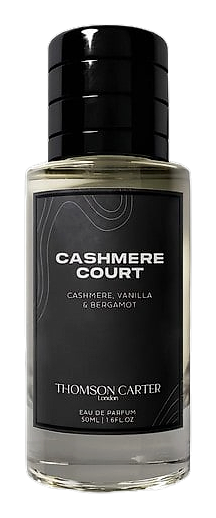
Cashmere Court is one of those deceptively simple compositions where the restraint is the point. Thomson Carter built this around a sparse note list that most perfumers would have padded with supporting players, though the real achievement is the editing. Bergamot, vanilla, cashmere wood. That's the whole brief, and it works because the notes don't fight each other. They take turns. The fragrance reads like a place name rather than a scent name, conjuring an entryway or a lobby, something architectural and quiet. There's a sense of intention in what got left out as much as in what stayed. Cashmere Court tells a small, contained story: the moment you stop moving and the room closes in around you. The bergamot opens bright, almost bracing, and then recedes just enough to make room.
What makes the structure interesting is how little it tries to do. Bergamot opens the composition, and its citrus sharpness doesn't behave the way sharp citruses usually do. Rather than vanishing early, it threads through the development, softening into something warmer without ever fully disappearing. Vanilla takes over the conversation midway, and the cashmere wood arrives to give that vanilla a surface to land on. The base settles into pure vanilla, which is a choice worth noting.
The evolution
On skin, Cashmere Court behaves like a well-edited sentence. The bergamot arrives first, bright and slightly bitter, the way real bergamot smells before a perfumer smooths it out. This opening lasts long enough to register, short enough that you don't have time to get bored. The heart is where the composition finds its center of gravity. Vanilla and cashmere wood step in, and the bergamot, rather than disappearing, softens and moves into the background like someone who finished their line and is now just listening. There's a powdery quality here, almost talcum-like, though softer, less chalky and more like the ghost of a powder. The vanilla reads creamy without being dairy, more like the inside of a vanilla pod than like ice cream or frosting. The cashmere wood contributes a soft, almost woven texture that makes the whole thing feel tactile rather than purely olfactory.
Cultural impact
Cashmere Court exists within a wave of independent fragrance houses that have expanded the market beyond legacy houses and department-store mainstays. Independent brands like Thomson Carter have built visibility through direct-to-consumer channels, niche retailers, and fragrance communities online rather than traditional wholesale placement. Cashmere Court sits alongside releases like Rouge Avenue and Bois de Santal, compositions that prioritize clarity and wearability over complexity. The appeal for many wearers is precisely that simplicity: a fragrance that performs a specific job well rather than trying to do everything at once.