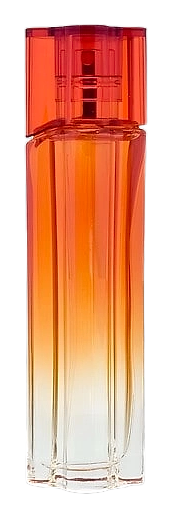

The Story
Why it exists.
The beginning
In 2000, Cacharel tasked Jean-Pierre Béthouart with something unusual: translate the house's romantic DNA into something unmistakably masculine. The result was Nemo, an oriental woody composition that borrowed the structure of Noa while going somewhere darker. Béthouart built upward from leather and vanilla instead of downward from citrus. The name, Latin for 'nobody,' carried a certain quiet confidence. Not the fragrance that announces itself. The one that stays.
The note architecture tells the story: warm spices open, resinous florals hold the middle, and a leather-vanilla base anchors everything. What makes it work is the opening accord, a less common material that gives Nemo its sharp, almost mineral edge before the warmth takes over. The carnation in the heart is unusual for a masculine composition; its clove-like spice bridges the fresh top and the dark base without letting either side win. That's where the craft sits, not in any single note, but in the transitions.
The evolution
The first thirty minutes belong to the spices. Cardamom and nutmeg arrive clean and sharp, with lavender cutting through like cold air. The opening adds something almost salty, almost medicinal, a brief signal that this isn't a straightforward aromatic. Then the florals take over: geranium and carnation rewrite the composition into something warmer, almost powdery, as labdanum's sticky resinous quality emerges. By hour two, the leather has arrived. It doesn't storm in, it settles. Vanilla follows, soft and close, wrapping around the cedar and patchouli underneath. The drydown is intimate. Moderate sillage means it stays in the room you're in, not the room you're leaving. This is a fragrance that rewards patience, unfolding gradually rather than announcing itself all at once.
Cultural impact
Nemo occupies an interesting position: a masculine fragrance from a house built on feminine romance. Among those who know it, there's genuine loyalty. Wearers describe it as the scent of someone who doesn't need validation, confident enough to choose something off the beaten path. The fragrance has a devoted following precisely because it doesn't chase trends or try to be everything to everyone. It's a quiet statement for those who prefer substance over spectacle.
The House
CacharelCacharel is the French fashion and fragrance house that captured youthful romance in a bottle. Founded in 1958 by Jean Bousquet, this Parisian brand revolutionized ready-to-wear with its bright, liberated spirit before conquering the perfume world with Anais Anais in 1978. Still beloved for iconic scents like Loulou, Noa, and Amor Amor, Cacharel represents effortless French femininity at its most playful and accessible. Now part of the L'Oreal family, the brand continues to craft fragrances that speak to the young and young at heart.
The Creator
Jean-Pierre BéthouartBéthouart's work tends toward warm, enveloping textures that linger close to the skin. He is particularly adept with contrasts between crisp top notes and creamy, almost powdery bases, a tension that gives his creations their characteristic push and pull.