The Story
Why it exists.
The beginning
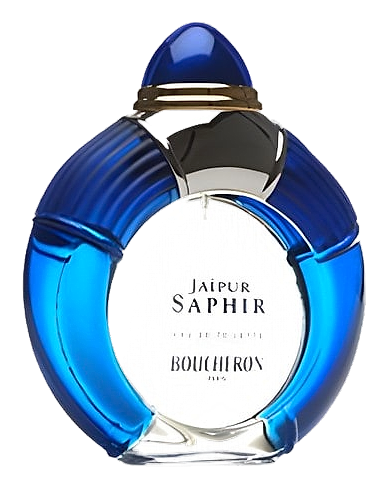
Frédéric Boucheron chose 26 Place Vendôme in 1893 for its light. Sunlight through tall windows, jewelry displayed vertically so passersby could imagine it being worn rather than merely observed. That philosophy of wearability, of pieces that move with the body, has guided Boucheron for over a century. Jaipur Saphir, launched in 1999, extends that instinct into fragrance. Powdery heliotrope, warm vanilla, and a quiet elegance that doesn't announce itself from across a room. Nathalie Lorson composed it with the same restraint Boucheron applies to gemstones: precision in structure, luminosity as the goal.
What makes Jaipur Saphir work is the heliotrope. That powdery, almost almond-like floral doesn't soften the vanilla so much as it deepens it, adding a dimension that straight gourmand vanillas miss. The magnolia brings its own cool stillness, waxy and restrained, before the jasmine arrives to turn the heart heady. It's a composition that knows when to step back. The yuzu opening sparkles, then yields. The base holds. Nothing shouts. Everything stays.
The evolution
The yuzu hits first. Bright, effervescent, a flash of citrus that doesn't linger long enough to call it sharp. White peach follows, soft and sweet, and then the cardamom shows its spice without fire. You're maybe fifteen minutes in when the hand-off happens. The citrus fades. The heliotrope and magnolia take over, warm and powdery, and the jasmine starts to breathe. An hour later, you're in the drydown. The vanilla and benzoin hold everything close, creamy and powdery at once, with a quiet amber glow underneath. The musk keeps it soft. This is where Jaipur Saphir lives. Intimate. The kind of fragrance that someone beside you notices, not someone across the room. It lasts several hours after that, a powdery vanilla that lingers like warmth from a fire that's already gone out.
Cultural impact
As a discontinued 1999 release, Jaipur Saphir has become a quiet collectors' piece for those who remember the era of French perfumery and its characteristic powdery florals. It's the kind of fragrance that surfaces in vintage shops and earns quiet reverence from anyone who recognizes it.