The Story
Why it exists.
The beginning
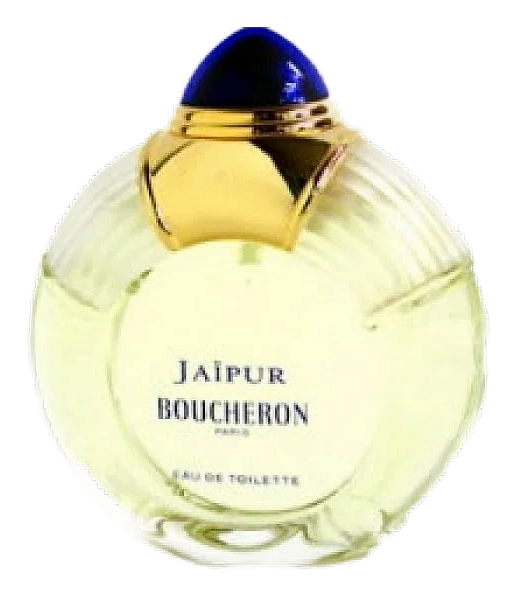
Jaïpur arrived in 1994 from Boucheron, with the bottle designed by Joël Desgrippes carrying a sculptural, ornamental sensibility, made to catch light the way Boucheron stones do. Sophia Grojsman composed the scent, building a structure of fruit and florals that opens bright and rounded, then deepens as the hours pass. The base settles into something warm and resinous, a composition that unfolds across the skin rather than announcing itself in a single gesture. It wears close, changing throughout the day as different layers come forward: the brightness at the start, the powdery florals through the middle, and that warm wood-and-resin trail as evening approaches.
Grojsman's signature move was building a plush, almost edible floral heart around a quietly dense base, and Jaïpur is exactly that. The top layer of apricot, peach, and pineapple reads as a fruit compote, but it's there to set up the contrast: a heart of peony, rose, carnation, and orris that hits with powdery intensity. That orris root is doing heavy lifting, lending the floral bouquet its velvety, almost suede-like texture. The base then anchors everything with benzoin, styrax, and sandalwood, a classic oriental foundation that gives the sweetness somewhere to land.
The evolution
The first ten minutes are pure fruit: apricot and peach first, then pineapple adding a sharp sweetness underneath, plum lending something darker, almost jam-like. Freesia threads through, giving the opening a watery lift that keeps it from cloying. Then the fruit recedes and the florals arrive, peony and rose at the front, but it's the carnation and orris that dominate the middle hours, creating that powdery, lipstick-like quality the fragrance is known for. Jasmine and orchid add creaminess without ever turning heady. The transition happens slowly, almost imperceptibly: the fruit doesn't vanish, it just steps back behind the blooms. As the florals reach their fullest, the carnation gives that warm, almost spicy edge, while orris brings the cool, rooty iris note that gives the heart its structure.
Cultural impact
Jaïpur emerged in 1994, a period when perfumery was leaning into bold florals and compositions that wore their richness openly. The fragrance holds its own within that context, offering a profile built around fruit, flowers, and resins arranged with confidence. Where it distinguishes itself is in the balance it strikes: the fruit is generous without becoming syrupy, the florals are full without losing their lift, and the base brings a warmth that anchors everything without flattening it. Carnation and orris carry the heart, two notes that together create that distinctively powdery, makeup-closet quality the scent is remembered for.