The Story
Why it exists.
The beginning
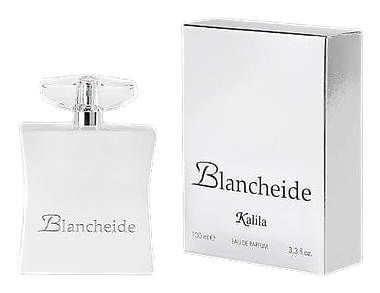
Kalila is Blancheide's quiet study in incense, composed by perfumer Pierre Stephane Rubis. The fragrance is built around frankincense resin, an aromatic material with deep roots in ritual and trade across centuries. Rubis pairs that ancient smoke with orris concrete, the root-derived iris absolute that brings a violet-tinged coolness to compositions lucky enough to include it. Kalila reads as something carefully composed. No flash, no fruit, no sugar. Just resin, root, and wood, arranged with the patience of someone who believes perfume should unfold like a letter, not announce itself. The composition keeps its distance from trend, staying close to materials that ask to be smelled slowly rather than projected across a room.
What makes this composition earn attention is the iris-incense axis, a pairing that should clash but doesn't. Orris carries a powdery, cold, almost soapy edge. Frankincense brings warmth, resinous depth, and a faintly bitter undertone. The two materials find their balance somewhere in the middle ground, with enough orris to lend that violet-tinged lift, enough frankincense to anchor it with sacred smoke. Cashmere wood in the heart bridges the two with a brushed, dry softness that reads almost tactile.
The evolution
The opening is the most assertive Kalila ever gets. Galbanum and incense arrive together, that green-smoke collision reading almost sharp, like the first breath when entering a room thick with resin. The iris enters quietly behind it, powdery rather than floral, more violet than rose. As the composition moves past its first phase, the galbanum recedes and the orris takes the lead, creamy and cool, while the frankincense hums beneath like a sustained note in an old building. The heart phase is where cashmere wood earns its name, a brushed, almost suede-like softness layered over the incense. It feels like wearing someone else's coat. The drydown is where Kalila settles into its truest form: white musk and cedar carrying a thin, persistent thread of frankincense that refuses to fully fade. On skin the drydown settles close, wearing intimate rather than wide.
Cultural impact
Kalila has found its audience among wearers drawn to stillness rather than spectacle. The incense-and-iris pairing places it in conversation with a wider tradition of contemplative fragrances that reward attention over projection. Its minimalism appeals to those who want scent as a private ritual rather than a public gesture. The composition's restraint makes it a natural choice for cooler weather, layered clothing, and the kind of environments where a fragrance is meant to be discovered rather than announced. It rewards the wearer who treats perfume as a personal reference point rather than a statement for others to read.