The Story
Why it exists.
The beginning
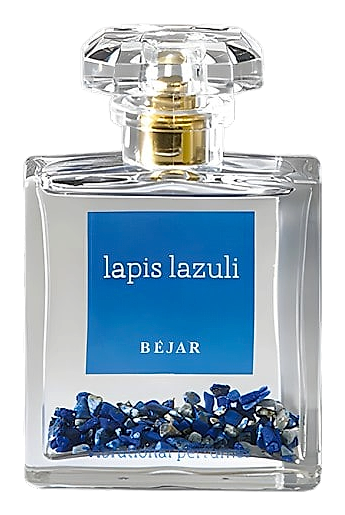
Lapis Lazuli arrived in 2012 from the workbench of Ramón Béjar. The stone it takes its name from is ancient, prized across civilizations for its saturated color and quiet luminosity. Béjar translated that mineral presence into a green-floral-woody arc, layering the crispness of leaves with rose and fruit, then grounding everything in sandalwood, cedar, and amber. It is not the literal smell of stone. It is the mood of stone: cool at the surface, warm underneath, holding its color for centuries. The opening carries a quick, verdant lift, the green notes reading more like crushed stem than cut grass, almost chlorophyll-bright against the softer sweetness waiting beneath. As the hours pass, the fruit accord rounds out, lending a jammy softness that softens the rose rather than drowning it.
What makes Lapis Lazuli worth a second look is the tension in the heart. Rose and fruit together can slide into cloying territory fast, especially when sugar joins the base. Béjar offsets that sweetness with green notes up top and a woody spine of cedar, sandalwood, and patchouli underneath. The result reads as a confection that remembers where it came from, sweet enough to flirt but anchored enough to mean it. It is a Floral Woody Musk that refuses to stay in any single lane.
The evolution
The opening is the greenest moment, leaves and stems with a faint vegetal snap, almost like walking past a garden after rain. Soon after, the rose arrives, but it is not the lipstick rose of a department-store classic. It is a sugared rose, dusted, blended into fruit and soft spice that warm the composition from the inside. As the hours pass, the cedar and sandalwood take over, the florals retreating into a musky, ambered sweetness that feels close to skin. The patchouli surfaces late in the wear, earthy and quiet, giving the drydown a grounded, almost meditative quality. Eventually, what remains is a powdery wood-and-musk hum, the kind of scent that still registers on a scarf the next morning without shouting.
Cultural impact
Lapis Lazuli sits comfortably among floral-woody-musk compositions built for everyday wear rather than special occasions. Wearers tend to reach for it as a cold-weather staple, the kind of scent that works for office days and dinner alike. It is not a statement piece. It is a quietly reliable one. The combination of rose, fruit, and grounded woods gives it enough presence to register in a room without demanding attention, making it an easy choice for those who want something polished but unobtrusive. Reviews consistently note its versatility, with wearers describing it as equally at home in cooler months and transitional weather.