The Story
Why it exists.
The beginning
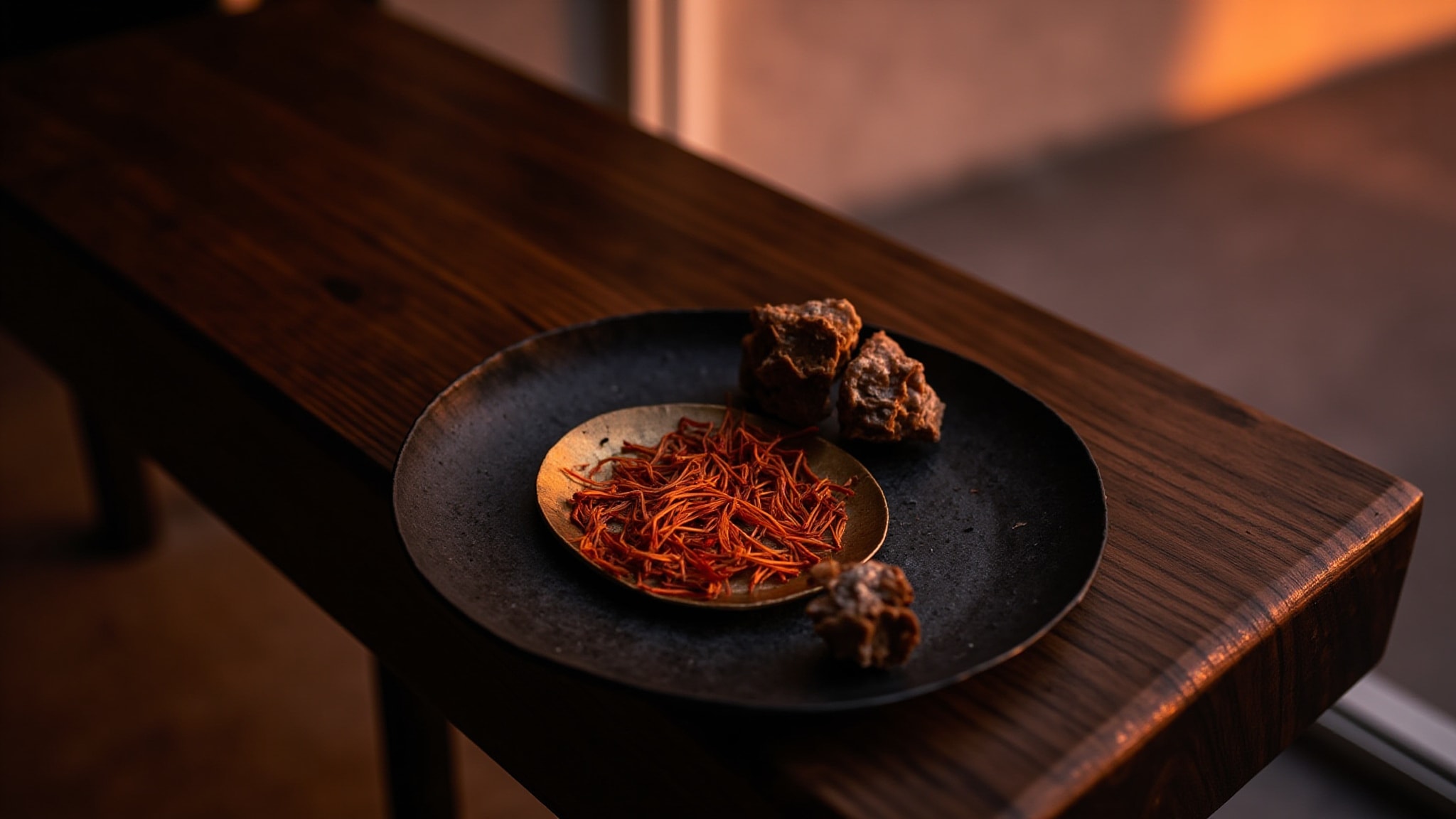
The fragrance takes its name from the Song of Songs, the erotic love poem woven through the Hebrew Bible, also known as the Song of Solomon or Canticles. The text is famous for its lush, sensuous language, steeped in the aromatic culture of the Biblical Middle East: saffron and spikenard, rose and myrrh, frankincense and labdanum. Ayala Sender built this composition around that aromatic vocabulary, working with each material as it appears in the poem, interpreted through a modern perfumer's hand. Sender, also known as Ayala Moriel, composed Song of Songs as a piece that translates an ancient sensory text into something wearable, letting the resinous and floral vocabulary of the poem find its own shape on skin.
What makes this composition worth your time is the way its materials relate to one another. The myrrh, frankincense, labdanum, and spikenard each carry a different texture on skin: myrrh leans sweet and faintly medicinal, frankincense lifts with a cool peppery brightness, labdanum smells of warm skin and dried hay, and spikenard brings a dense, almost animal rootiness. Pairing them with saffron adds a waxy, leathery flicker at the top, the threadlike crackle of the spice itself rather than any rounded gourmand sweetness.
The evolution
The opening is saffron, dry and slightly waxy, the way saffron threads smell before they touch hot water. There's a leathery edge to it, almost suede, and it sits close to the skin rather than reaching outward. The rose enters shortly after, but not as a soliflore; it arrives filtered through that saffron haze, dusty and meditative. The spikenard settles underneath, adding an oil-pressed, rooty weight that grounds the composition from the start. As the saffron gradually recedes, the rose begins to feel less like a flower and more like the memory of one, a soft impression rather than a crisp petal. The frankincense and myrrh move forward as the bouquet loses its initial sharpness, shifting from smoky sweetness to something drier and more architectural. Labdanum drags the whole composition toward amber, giving it that golden-honeyed undertone.
Cultural impact
Song of Songs commits fully to frankincense, myrrh, labdanum, and spikenard, materials most modern wearers encounter only in passing, in old churches, in museum cases, in the occasional incense blend. The composition holds to those resinous materials rather than pulling in conventional modern shortcuts, building its structure around them from start to finish. The rose at its center reads as a Biblical rose rather than a contemporary floral, dusty and inward-turning, more reminiscent of attar than of a fresh-cut bouquet.
The House
Ayala MorielAyala Moriel translates the scent of the Israeli landscape into pure, hand-crafted aromas. Since 2001 the house has built a modest catalogue that reads like a diary of sun-kissed herbs, wild flowers and ancient woods. Each bottle invites the wearer to pause, breathe, and discover a moment that feels both intimate and timeless.
The Creator
Ayala SenderSender's style centers on botanical perfumery, with compositions built around natural ingredients rather than synthetic accords. Her fragrances reportedly favor complexity and artistry, reflecting her training in classical techniques.