
The Story
Why it exists.
The beginning
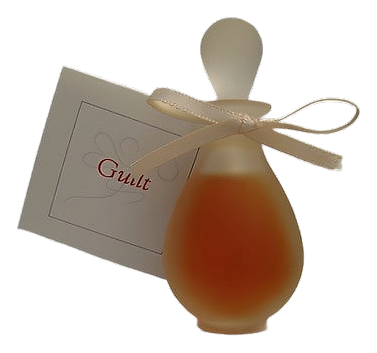
Guilt arrived in 2002, when Ayala Sender was experimenting with an old idea: what does it mean to want something you shouldn't? The answer, she decided, smelled like orange and chocolate. Not separately, together. The brightness of citrus against the depth of cacao. One you reach for openly. The other, only when no one's watching. She built the formula around cacao absolute in abundance, a material so dense and dark it doesn't just smell like chocolate, it smells like the moment before and the moment after. Orange blossom kept it from becoming heavy. Honey absolute gave it that slow, viscous warmth that settles into skin rather than floating above it. It was, from the start, a perfume about tension: indulgence versus restraint, sweetness versus consequence. The name came last. It fit.
The note structure pulls in two directions at once. Cacao absolute is the anchor, not the synthetic chocolate notes found in mainstream flankers, but a true absolute with bitter, slightly animalic depth that reads as almost raw. Against it, blood orange and orange blossom absolute create a persistent brightness, a citrus quality that refuses to let the composition become merely heavy. Honey absolute adds sweetness without sugar, it smells like the real thing, warm and slightly feral rather than commercially sweet. Turkish rose and jasmine absolute round the heart into something lush without tipping into caricature.
The evolution
Guilt opens with blood orange so bright it almost stings, clean, tart, immediate. The citrus doesn't tease. It arrives and declares itself. Within minutes, the jasmine and orange blossom absolute soften the sharp edges, introducing a floral warmth that feels sunlit rather than delicate. The transition is smooth but noticeable: brightness gives way to something richer, as cocoa absolute pushes forward and honey absolute thickens the composition into something almost edible. The heart is where Guilt earns its name. It's warm and luscious and entirely without apology. Then the amber arrives. Not aggressively, but with the quiet certainty of something that intends to stay. Siam benzoin settles into the base alongside it, adding resin and faint vanilla warmth. The drydown is intimate, close to the skin, lasting well beyond what the initial brightness promised. On fabric, it holds into the next day.
Cultural impact
Guilt has maintained a quiet presence in the niche fragrance community since its 2002 launch. It occupies a specific corner of the oriental category, not the smoke-and-spice orientals of the 2010s, and not the light citrus aquatics that dominated the era of its debut. What makes Guilt notable is its refusal to compromise: the honey and cocoa don't whisper, and the citrus brightness doesn't apologize for existing. It attracts people who want a perfume that takes up space and knows it.