The Story
Why it exists.
The beginning
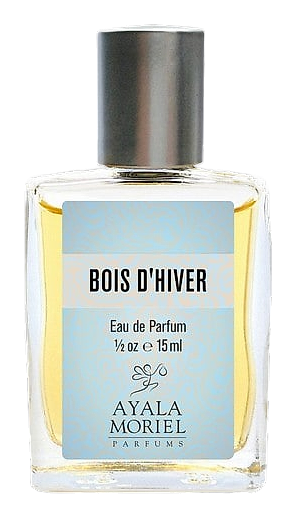
Bois d'Hiver was Ayala Moriel's answer to a specific problem: winter holiday fragrances had become predictable. Fir, pine, a little cinnamon, done. Launched in 2006 as a limited edition, it was designed from the start to feel less like a seasonal release and more like a private ritual. The name says it, Winter Wood, but the composition is anything but literal. Ayala Sender built this around a tension she loved: the cold sharpness of evergreen needles meeting the warm, almost sticky resin of gum myrrh and tolu balm. Incense threads through the whole thing like a through-line, not a feature. The result wasn't a winter fragrance. It was a winter forest, captured in a 9ml extract bottle and released to whoever happened to find it.
What makes this composition unusual isn't any single note, it's the ratio. Most fragrances in this category lean heavily on one archetype: fresh conifer, or sweet spice, or smoky resin. Bois d'Hiver doesn't choose. Bitter orange opens with a clarity that most people associate with summer, but here it acts as a lens, it makes everything that follows sharper, more defined. The clary sage and rosemary don't add herbal softness, they add structure. Then the absolutes arrive: jasmine grandiflorum and Moroccan rose at the heart, orange blossom absolute, these are the luxury layer, the part that separates a fragrance that smells like a forest from one that smells like a memory of one.
The evolution
The opening lasts about twelve minutes. During that window, bitter orange and the camphor of fir absolute compete for attention, the camphor wins, then retreats. What's left after that is all structure: petitgrain, juniper berry, clary sage forming a green-bitter middle that feels less like a perfume and more like standing somewhere with your eyes closed. The heart arrives around twenty minutes in, and it's where this fragrance earns its name. Orange blossom absolute and Moroccan rose don't smell like flowers in any soft sense, they're warm, waxy, almost resinous themselves, held up by tolu balm. The frankincense doesn't announce itself. It threads through everything like a bass note you feel more than hear. By the third hour, you've got Virginia cedar, myrrh, and fir all settled into something that reads as woody but isn't quite, it's darker, more animal-adjacent without ever crossing into that territory. On skin: six hours, sometimes seven. On fabric: still there the next morning, quieter but unmistakable.
Cultural impact
Bois d'Hiver occupies a specific niche within the 2000s natural perfume movement, emerging during a period when indie and natural perfumery were gaining traction among collectors seeking alternatives to mainstream releases. The 2006 launch positioned Ayala Moriel as an early voice in the modern natural fragrance conversation, with its incense-heavy composition predating the boom in resinous, conifer-forward scents that followed. As a limited edition, the fragrance has accumulated a following among collectors who value its specificity, the way it captures a particular moment in ethical perfumery's development. Its availability has always been restricted, which has only deepened its cult status within natural fragrance circles.