
The Story
Why it exists.
The beginning
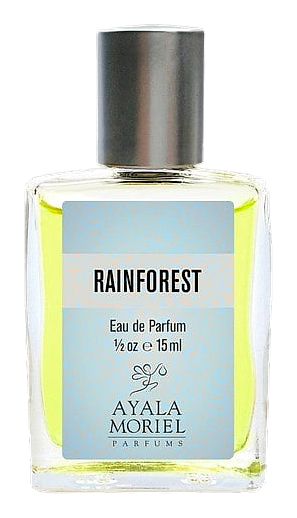
Rainforest takes its name seriously. Not as metaphor, not as mood board, Ayala Moriel built this around the actual scent of the mossy, coniferous rainforests along the Pacific Northwest coast. The 2001 release arrived when green fragrances were trending lighter, more aquatic. This one went the opposite direction: dense, herbal, unapologetically rooted. The brief seemed simple enough, translate a forest floor after rain into something wearable, but the execution required balancing sharpness (galbanum, juniper) against depth (oakmoss, black spruce). The result doesn't smell like a vacation. It smells like a place you'd actually go.
What makes Rainforest unusual isn't any single note, it's the structural honesty. The top doesn't pretend the heart doesn't exist; galbanum's green bite hands directly to black spruce within minutes, no fanfare. Orris root appears as a quiet mediator between the bright opening and the earthy base, lending powdery elegance without sweetness. Violet leaf bridges the juniper and the hay, it's where the dewy, slightly animalic green note lives that most perfumers achieve with synthetic molecules. And the base of hay, oakmoss, and spikenard doesn't arrive late, it starts arriving during the heart, layering in so the drydown feels like an arrival rather than a departure.
The evolution
The opening hits fast, galbanum and juniper arrive together, a one-two punch of green sharpness. Black spruce settles underneath within two minutes, dampening the brightness with cool resin. Violet leaf shows up around minute five, dewy and slightly animalic. Then the handoff: orris root smooths the transition, adding powdery elegance while the conifer backbone persists. The drydown is where Rainforest earns its name. Hay emerges first, actual dried grass, not sweet tonka. Oakmoss follows, earthy and faintly mushroomy. Spikenard lingers longest, a quiet medicinal warmth that stays close to the skin for hours. Moderate sillage means you're aware of it; others might catch a trace only when they're near. On fabric, the hay and oakmoss can last into the next day, faint, insistent, like the smell of a cabin after you've left.
Cultural impact
Rainforest arrived in 2001, a period when green fragrances were trending toward aquatics and ozonic freshness. It went the opposite direction, dense, herbal, and unapologetically chypre, leaning into oakmoss and galbanum with conviction. The fragrance attracted wearers who wanted green to smell like a forest, not a shower. Its moderate sillage and moderate longevity made it a quiet choice, less statement, more environment. For those who find modern fresh fragrances too polished, Rainforest offered something more: genuine botanical rawness.