
The Story
Why it exists.
The beginning
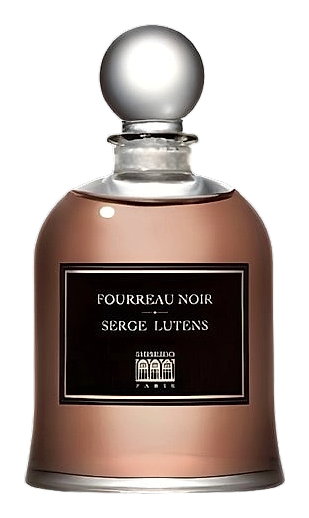
The name is the concept. Fourreau means sheath, the thing that holds something dangerous. Noir means black. So what you have is a black sheath, something worn close to the body, hiding its contents until the moment of reveal. Christopher Sheldrake composed this fragrance in 2009, building it around a tension between concealment and emergence. The leather accord anchors the composition, while tonka bean introduces a sweetness that softens the edges. What you get is a fragrance that stays close to the skin, offering its depth only to those nearby.
The lavender-tonka combination sounds simple on paper. It isn't. Sheldrake lets the lavender stay, giving it space to breathe before the tonka begins to move. The tonka doesn't arrive as a flood. A seep. Almond follows, bringing a gourmand softness that shouldn't work against the herb but does. The smoke is patient. It doesn't announce itself. It settles beneath everything, adding weight without odor. The delay is the point. The fragrance earns its warmth by not offering it immediately.
The evolution
The opening announces lavender with clinical precision, clean, sharp, the kind of clarity that could pass for soap at first. Then the tonka begins its slow slide. Not a flood. A seep. Almond follows, bringing a gourmand softness that shouldn't work against the herb but does. The smoke is patient. It doesn't announce itself. It settles beneath everything, adding weight without odor. The leather arrives, not the polished kind, but the worn kind, the kind that knows skin. It stays close. Intimate. A secret shared only with whoever's standing close enough.
Cultural impact
Fourreau Noir occupies a particular space in the Serge Lutens catalogue. It's not one of the challenging ones. It's the fragrance for someone who wants something that works without effort, that doesn't require explanation or defense. The people who wear it tend to return to it when other fragrances feel like too much work. It's the fragrance for someone who's done explaining themselves.