The Story
Why it exists.
The beginning
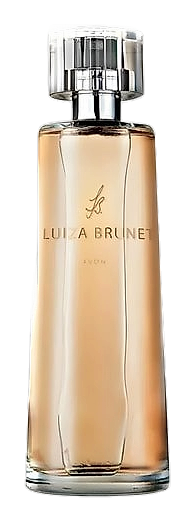
Luiza Brunet, the Brazilian model and actress, brought her name to this 1996 Avon release, a fragrance built around accessibility without sacrificing depth. Perfumer Joachim Correl worked with Avon's fragrance house to create something that could live on a neighbor's vanity and still hold interest years later. The brief, if there was one, seems to have been: make something that smells like a person, not a product.
What makes the structure unusual is the top-to-bottom contrast: the opening leads with herbal freshness (lemongrass, lavender, green notes) that reads almost astringent, while the base settles into warm woods and powdery musk, a completely different energy. The jasmine heart bridges them but doesn't fully resolve the tension, leaving the fragrance feeling like two scents in conversation rather than one unified whole. That's the gamble. That's also the hook.
The evolution
The first thirty minutes belong to lemongrass and green, sharp, almost medicinal before the orange softens it. Lavender arrives mid-opening and does the quiet work of making the whole thing approachable. By hour two, jasmine pushes through with geranium, and suddenly you're in white floral territory: soft, warm, the kind of smell that clings to clothes rather than filling a room. The drydown takes its time. Cedar and sandalwood emerge around hour four, but they're never loud, more suggestion than statement. Musk and amber hold everything together, fading slowly into skin-warmth that lingers another two to three hours past the initial application. On fabric, it outlasts itself.
Cultural impact
Luiza Brunet arrived in 1996 during a decade when mass-market women's fragrances leaned heavily toward sweet florals and aquatic notes, mirroring the era's love for sugary gourmands. Its herbal-green opening, anchored by lemongrass and lavender, represented a deliberate counter-trend that appealed to women seeking something distinct from the prevailing sweetness. The fragrance struck a balance between Avon accessibility and niche complexity, positioning itself as an option for consumers who wanted sophistication without exclusivity pricing. Within Avon's catalogue, it represented a shift toward gender-neutral or unisex-leaning compositions, influencing subsequent releases that explored herbal and woody territories.