The Story
Why it exists.
The beginning
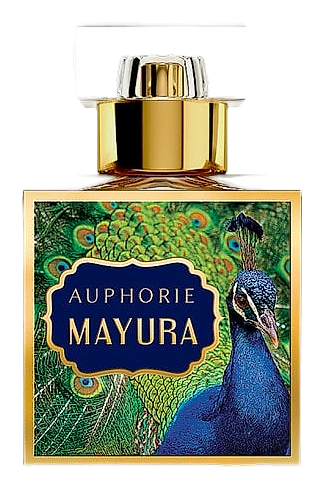
Mayura is Sanskrit for peacock, the sacred fowl of Hindu mythology, a bird associated with divinity, beauty, and an aura that commands attention without effort. The name alone conjures something resplendent, a creature whose plumage radiates color and presence. Mayura the fragrance attempts to mirror that weight, drawing from a palette of Indian materials, tuberose, jasmine, spices, Mysore sandalwood, jatamansi, layered into a composition that moves between the sacred and the sensual. The white florals arrive first, enveloping the wearer in creamy, opulent warmth. Beneath them, the spices simmer: davana with its slightly medicinal elegance, masala with its complex heat. The woods and resins anchor everything, giving the fragrance a foundation that feels ancient and grounded.
The animalic materials civet, hyraceum, and castoreum form the base of Mayura. These ingredients carry depth and complexity, bringing a warmth that settles against skin. The white florals arrive first, jasmine and tuberose, Indian and opulent, and as they soften, the spices enter. Davana, masala, wormwood. Then the animals emerge. Castoreum gives the blend a leathery warmth. Hyraceum grounds it with an earthy depth that settles into skin. Civet brings the musk that makes everything feel worn, human, alive.
The evolution
The opening announces itself immediately: a lush cloud of Indian tuberose and jasmine, creamy and enveloping. Ylang-ylang softens the edges without diluting them. Soon the davana and rose emerge, elegant and slightly medicinal, and the masala spices begin to assert themselves. The oakmoss and amber peek through, but they're not the point. The point is the handoff: the florals recede, and what rises is the animalic foundation, warming against skin. Civet, then castoreum. The hyraceum arrives last, adding an earthy depth that feels like humidity, like breath. The composition settles into a dense Oriental base, Mysore sandalwood, agarwood, incense, with the animalics still present underneath, a pulse rather than a shout. On skin, it evolves through distinct phases: warm floral, then warm spice, then warm skin, then something that smells like it was always there.
Cultural impact
Mayura occupies a specific space: the animalic-floral tradition filtered through an Eastern lens. The combination of Indian jasmine and tuberose with civet, castoreum, and hyraceum creates something that pushes further into animalic territory than most fragrances dare. It is a composition that requires engagement, that rewards those who approach it with curiosity rather than caution. Wearers who connect with it tend to connect deeply, finding in its layers something that transcends the usual vocabulary of perfumery.