The Story
Why it exists.
The beginning
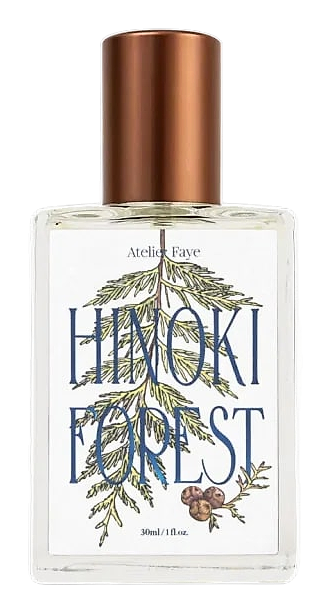
Hinoki Forest draws its name directly from the hinoki tree itself, the central material around which the entire composition is built. Atelier Faye translated that specific wood into a 2023 release concerned less with spectacle than with atmosphere. The intent was to capture a feeling rather than paint a picture: the sudden coolness when you step from open sunlight into a grove of old hinoki, the hush, the way the air tastes greener and the light goes amber. This is the house's version of that threshold moment, composed for the wearer who treats scent as a setting rather than an accessory.
What makes Hinoki Forest structurally interesting is how restrained the material list is. The entire composition moves through its notes without ever introducing a sweet or floral detour. The pink pepper does a particular kind of work at the top, arriving alongside the lime with a clean, dry heat that keeps the citrus from feeling like a generic cologne opener. The moss and pine aren't there to make this smell like a candle or a cleaning product.
The evolution
The first impression is the brightest the scent will ever be. Lime and pink pepper arrive with genuine clarity, almost like slicing into the fruit over a wooden cutting board, and there's a clean, dry heat from the pepper that keeps everything grounded. The citrus fades relatively quickly, and the hinoki wood takes its place alongside clary sage, which adds a slightly medicinal, cool-herbal edge that keeps the opening from ever reading as sweet. Soon after, the moss and pine have settled in, and the composition shifts from crisp to damp. This is the phase that smells most like the name suggests: shaded, green, resinous, cool against the skin. The base arrives gradually as the hours pass. Sandalwood and cedarwood soften everything without flattening it, and the ambergris adds a faint salt-warm undertone that keeps the drydown from going purely woody.
Cultural impact
Hinoki Forest speaks directly to a specific kind of fragrance wearer: people who reach for hinoki-scented bath products, who know the difference between hinoki and sugi, who want their fragrance to feel like a room they've entered rather than an announcement they've made. There's something undeniably Japanese in the sensibility it draws from, even filtered through a non-Japanese perfumery house: the reverence for understated materials, the trust in negative space, the belief that restraint itself can be a form of luxury.