
The Story
Why it exists.
The beginning
The composition distills a classic spirit into something contemporary. Bergamot leads the opening, bright and assertive, while green notes and herbal accents provide texture beneath the citrus. Cardamom adds an unexpected warmth that prevents the top from reading as merely fresh, instead signaling a more deliberate construction. The result feels like a reinterpretation rather than a reconstruction, less like a new fragrance and more like a refined memory of what a masculine scent should be. Each ingredient serves the whole, creating an impression that invites you to rediscover familiar elements in a cleaner, more focused form.
What makes the composition interesting is its restraint. Bergamot leads the opening, but the herbal notes alongside it keep the citrus from being predictable, a green nuance that stops the top from reading as merely fresh. The green notes add subtle dimension without pulling focus. It's an opening that could have said more, but the editing is the point. The heart and base do more work here than in most fragrances, so the top doesn't need to carry everything.
The evolution
The first fifteen minutes belong to bergamot, bright and unapologetic. Herbal accents and green notes thread through the citrus, keeping it from feeling like a stereotype. Then the heart develops. The florals arrive quietly, softening the initial brightness while the citrus softens without disappearing. There's a creaminess that begins to emerge, a warmth that builds as the fragrance settles. By the second hour, the composition has transformed into something softer, the initial crispness replaced by a smooth, lingering finish. The drydown is clean and present, with moderate projection throughout that keeps the fragrance intimate rather than theatrical. The longevity holds steady, staying close to the skin for extended wear without becoming heavy or overwhelming.
Cultural impact
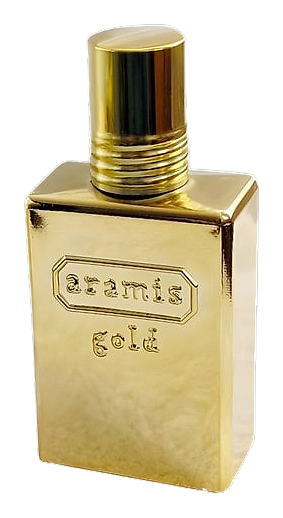
Gold represents an American approach to masculine perfumery, created during an era when domestic houses were establishing their own identity separate from European traditions. The fragrance emerged as part of a broader movement within American perfumery to create refined, complex compositions that could stand alongside their international counterparts. The creation by Bernard Chant marked a significant contribution to the Aramis line, demonstrating that American houses could produce sophisticated scents with lasting appeal.
The House
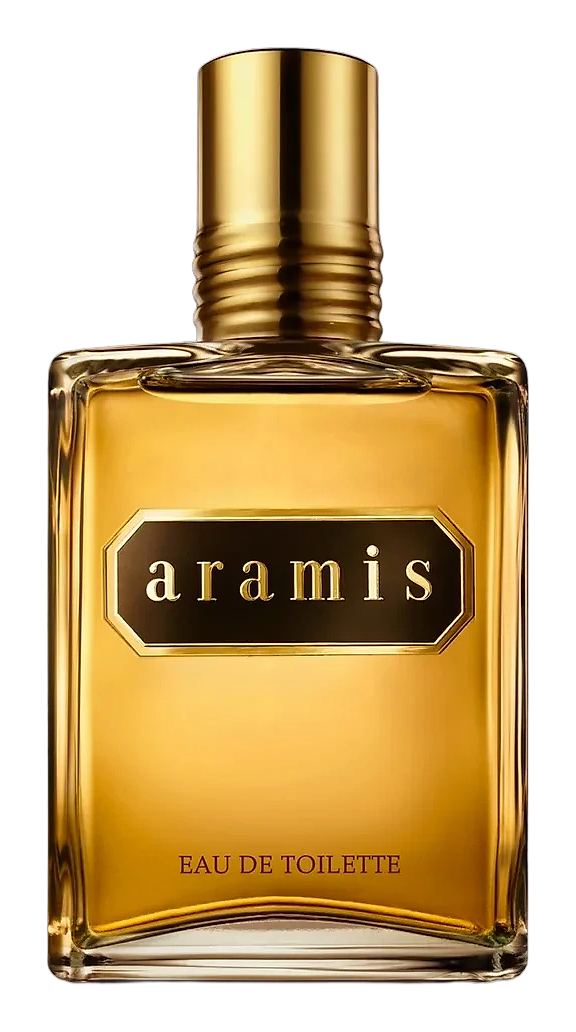
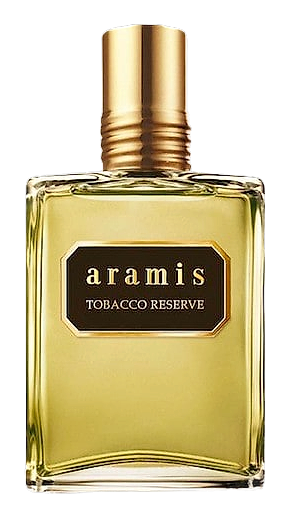
AramisAramis stands as a foundational name in American men's fragrance, established in 1964 by Estée Lauder as one of the first prestige men's grooming brands available in department stores. The original Aramis scent, created by perfumer Bernard Chant, introduced a signature blend of aromatic woods, leather, and traditional masculine notes that set the template for masculine fragrance in the American market. Over six decades, the brand has developed a portfolio spanning multiple expressions of masculine elegance, from the foundational 1964 original through contemporary interpretations like Tobacco Reserve in 2018. Aramis operates as a division within the Estée Lauder Companies, alongside its notable portfolio holding of Tommy Hilfiger Fragrances, acquired in 2003.
The Creator
Stefano FrecceriAs both distiller and perfumer, Frecceri brought technical precision to his compositions. His classical Italian approach favored citrus as a structural foundation, reflecting Genoese tradition and the broader Mediterranean cologne aesthetic.