The Story
Why it exists.
The beginning
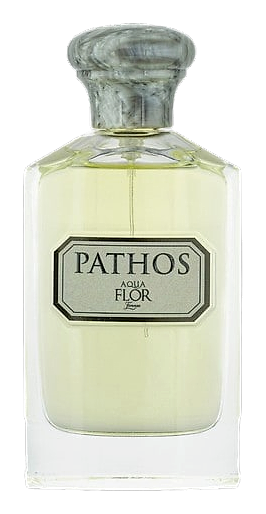
Pathos is a woody aromatic from Aquaflor Firenze, listed with Nicola Bianchi as the perfumer and designer. It's a fragrance that doesn't ask for attention so much as it assumes it. The composition reads like a classical structure dressed in contemporary tailoring. Calabrian bergamot and citron arrive bright, almost architectural, the kind of opening that announces a polished entry. Pink pepper adds just enough friction, a small admission of warmth beneath the composure. Then the heart deepens. Ylang-ylang softens the edges while patchouli grounds the entire construction with that earthy, mineral weight. It's a deliberate pivot from sharp to smooth, and it's where the fragrance earns its name.
What makes Pathos distinctive isn't any single note, it's the restraint with which they're combined. The composition pairs Calabrian bergamot with citron rather than lemon, which adds a slightly bitter, almost quinine-like edge to the opening. The ylang-ylang in the heart is a deliberate counterweight: tropical, almost indolic, softening what patchouli threatens to make severe. Then the base does something clever. Patchouli doesn't simply support the structure from underneath, it actively reshapes the composition as the hours pass, lending the fragrance a slow, deliberate gravity.
The evolution
Pathos opens the way a well-cut jacket looks: precise, composed, almost severe. The Calabrian bergamot and citron arrive first, cold and bright, and the pink pepper threads through them like a stitch of heat, not enough to register as spice but enough to keep the opening from feeling clinical. At first, this is a sharp, citrus-led aromatic, the kind of opening that works in any weather and any room. Then the handoff begins. Patchouli starts to rise gradually, almost imperceptibly at first, and it changes the entire architecture of the scent. The citrus doesn't disappear, but it recedes behind an earthy, slightly mineral weight that feels heavier, more deliberate. Ylang-ylang adds a creamy, almost tropical smoothness that softens the patchouli's edges without dulling them. This is the phase most people associate with Pathos, the heart, where the fragrance settles into its real identity.
Cultural impact
Pathos operates comfortably within the woody aromatic family, a category long associated with classical masculine perfumery and its fougère-adjacent roots. The ylang-ylang and oakmoss pairing gives it a slightly old-world gravity, and the patchouli base anchors it with a mineral, earthy density that recalls older European compositions. This isn't a fragrance chasing trends toward transparency or aquatic freshness; it leans instead into a richer, more material-driven register. The result is a scent that feels rooted in perfume history while still wearing cleanly on contemporary skin.