
The Story
Why it exists.
The beginning
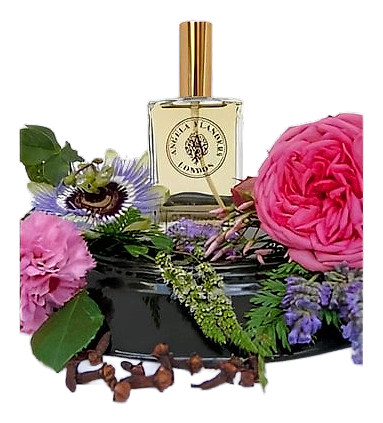
Zanzibar arrived in 1988, a composition from Angela Flanders that drew its name from the Tanzanian archipelago, a historic waypoint on the Indian Ocean trade routes. The fragrance channels a sense of geographic convergence: the East African coast meets East India, with the floral abundance of an East London workshop folded in. It reads as an exercise in place translated through material, the kind of scent where the name does real work rather than functioning as decoration. The sandalwood at its base carries quiet warmth, and the white florals in the opening give the composition its lift, so the geography implied by the name finds a parallel in the way the notes themselves traverse categories and continents.
What's unusual about Zanzibar's structure is how the white floral top behaves against the base beneath it. Jasmine, ylang-ylang, and rose open dense and heady, the kind of flowers that fill a room before you've registered them. But instead of resting on a soft, conventional foundation, the composition drops into sandalwood and cedar with an almost structural weight. The lemon leaf and spice notes in the heart act as a bridge, bringing brightness and heat into the transition so the woody base never feels dry.
The evolution
The first ten minutes belong entirely to the flowers. Jasmine arrives first, dense and almost indolic, then ylang-ylang spreads its banana-soft sweetness underneath, with rose threading through like a quieter voice. The combination is opulent, almost overwhelming, the kind of opening that announces itself. Around the twenty-minute mark, the lemon leaf cuts through, green and sharp, pulling the florals upward and giving the composition air. The spice notes warm in alongside it, not hot but present, an undefined exotic warmth without any single ingredient dominating. By the one-hour point, the white flowers have receded significantly. What remains is the woody architecture: sandalwood first, creamy and dense, then cedar underneath, drier and more structural. The spices linger in the middle distance, the florals a ghost.
Cultural impact
Zanzibar carries the particular confidence of a late-1980s composition released by a house that still mixes by hand in East London. It appeals to wearers who find the logic of a well-built floral-woody pyramid more compelling than the prevailing winds of the mass market, people who read scent as a form of authorship rather than as a seasonal accessory. The fragrance announces its provenance through the composition itself, through the way the white florals give way to a sandalwood and cedar architecture that feels considered rather than accidental. There is no marketing overlay doing the work, just the structure of the juice.