The Story
Why it exists.
The beginning
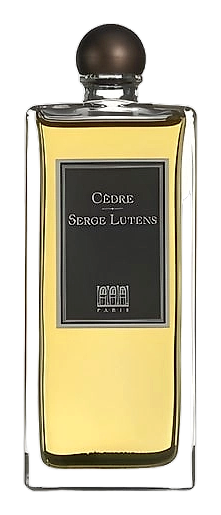
Cèdre began as a study in cedar, a note that Lutens has returned to throughout his career. Christopher Sheldrake built the structure: cedar at the center, with other elements supporting its weight. The Flacons de table collection holds it in clear glass, letting the liquid speak before you even open it. The fragrance moves slowly, shifting from the initial impression through to the final stages, each layer revealing something different about the wood at its heart. There's a coolness that settles in, a kind of austere elegance that refuses to rush.
What makes Cèdre unusual is how the cedar hides. It doesn't announce itself in the opening, that belongs to clove, camphor, something almost medicinal. The wood arrives late, wrapped in amber warmth, softened by musk. The tuberose doesn't perform; it murmurs underneath, an indolic whisper that most people miss entirely. It's a fragrance that asks you to wait, to let the sharp edges dissolve before the real story begins.
The evolution
The first five minutes belong to clove and camphor, a mentholated sharpness that feels more like a pharmacy than a perfume counter. Some people never get past this. But if you stay: the amber hum kicks in, that signature Lutens richness that anchors so many of his compositions. Then, finally, the cedar. Not bright, not pencil-shaving linear. Velvety. The tuberose surfaces here, indolic and white, doing exactly what Lutens intended, barely there but essential. The drydown holds for hours, a warm skin scent that stays close, intimate, the kind of presence that someone standing next to you will notice before you do. On some skin it lingers through the evening, the cedar quietly asserting itself long after the top notes have faded.
Cultural impact
Cèdre occupies a specific corner of the Serge Lutens world: the Flacons de table collection, presented in clear glass rather than the black-lacquered Collection Noire. It's for people who know the house well enough to seek it out. The devoted following appreciates the tension between the confrontational opening and the yielding drydown, the cedar that arrives late, the warmth that sweetens without overstepping. It's a quiet reference point for those who believe fragrance should ask something of the wearer, that the best scents reward patience and attention. This one rewards both.