
The Story
Why it exists.
The beginning
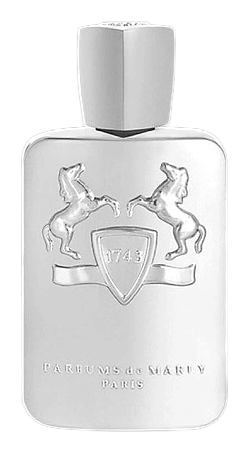
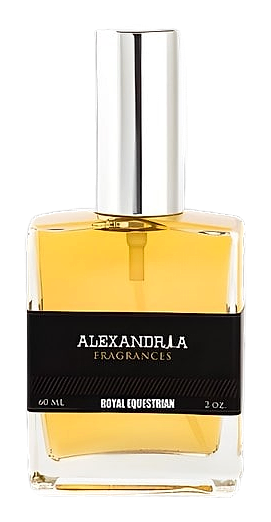
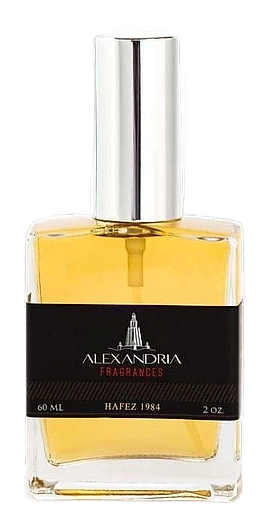
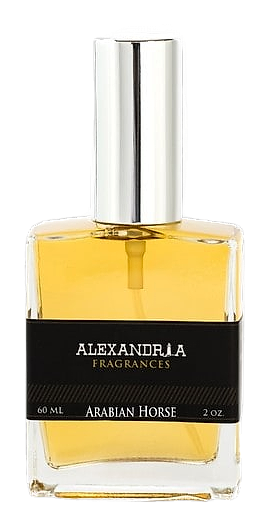
Arabian Horse arrived in 2017 from Alexandria Fragrances, a house founded by perfumer Hany Hafez. The composition draws a direct line to Parfums de Marly's Herod, and it doesn't hide that lineage. What it does is take Herod's blueprint, that dense sweet-spice-tobacco architecture, and rebuild it with its own personality. The name conjures something powerful, bred for endurance, and the juice inside that image lives up to it. This isn't a fragrance designed to whisper. Hafez loaded it with enough cinnamon, tobacco, and vanilla to fill a jacket lapel for the better part of a day, then smoothed the edges with enough restraint to keep it wearable rather than aggressive. The opening burns hot, all that spice and tobacco stacking on top of each other, but the composition knows when to pull back.
The frankincense and osmanthus sitting right at the heart of Arabian Horse do a lot of the heavy lifting, and they deserve the credit. The frankincense adds that smoky, almost liturgical lift, a sense of something burning in the distance, while the osmanthus contributes a soft, leathery fruitiness that keeps the tobacco from going one-dimensional. It's that middle work, the architecture between the spice top and the sweet base, where the composition shows what it can really do.
The evolution
The first ten minutes belong almost entirely to cinnamon and that pepperwood bite, sharp and bright enough to register from arm's length. Don't mistake that opening for the whole fragrance, because it isn't. By the thirty-minute mark the tobacco and frankincense have pushed forward, the sweetness has dialed itself down to a simmer, and the scent reads warmer, smokier, more like an old leather chair than a bakery. The osmanthus threads through quietly, adding a slight apricot roundness that most people won't name but everyone notices. After two or three hours the composition settles into its base: vanilla softens everything, the patchouli and vetiver ground it, and the musk adds a skin-like hum that makes the drydown feel less like a fragrance and more like something you just naturally smell like.
Cultural impact
Arabian Horse is frequently discussed alongside Parfums de Marly's Herod, and the comparison is unavoidable because the DNA is so clearly shared. Wearers tend to fall into two camps: those who consider it one of the stronger values in the tobacco-vanilla lane for its price point and full-day performance, and those who find it redundant if they already own Herod itself. Both positions are reasonable, because the fragrance doesn't pretend to be something it isn't. It's a tobacco-vanilla with frankincense and osmanthus, weighted toward sweetness, and it wears exactly like what it is.